 Chef Johnny is only 25 years old but presides over two Hulus and is a consulting chef or manager of many more.
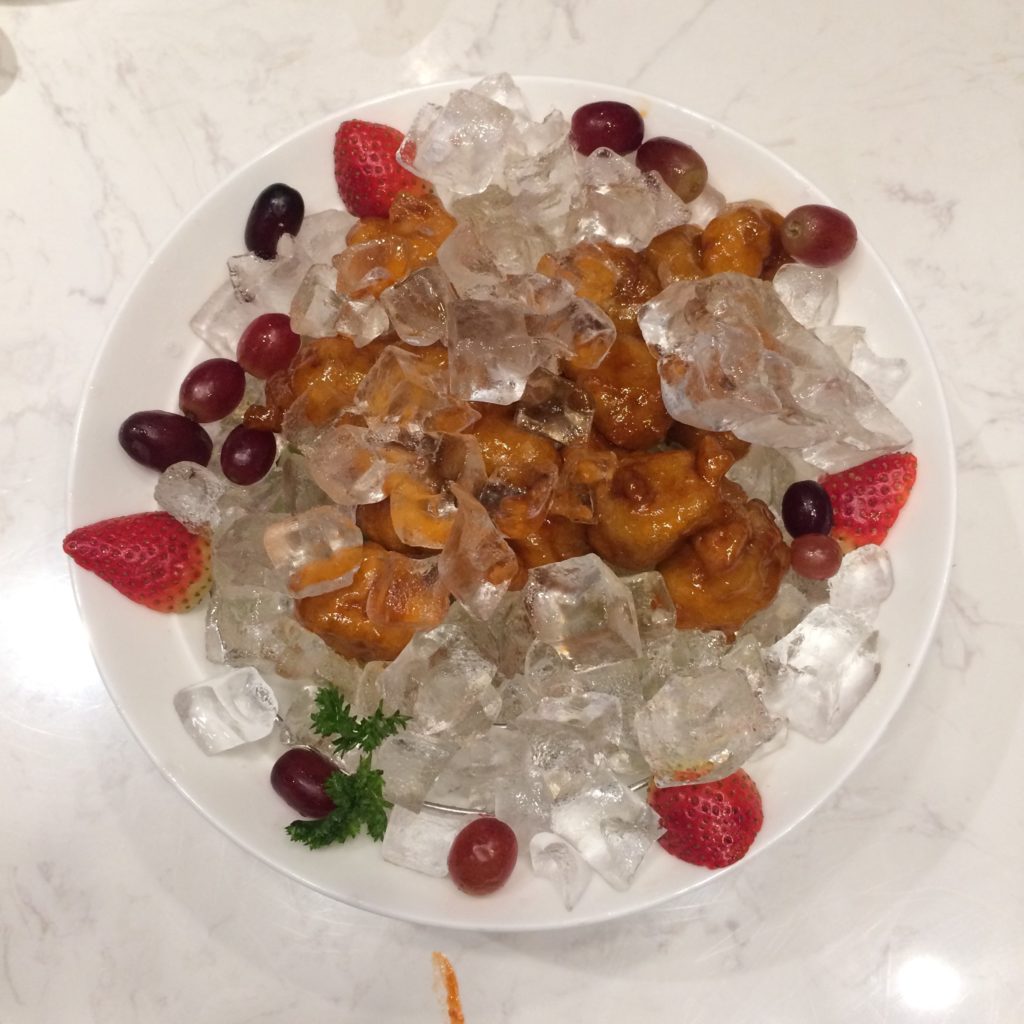
 He trained in French and Japanese cuisine, and while he doesn’t like to eat them, he loves making dessert (though this dish below is sweet and sour pork, on ice, with random fruit).
 It was a pleasure to have him explain some of his food philosophy and history over a meal for food bloggers at Hulu at King Street Wharf, only a few months old.
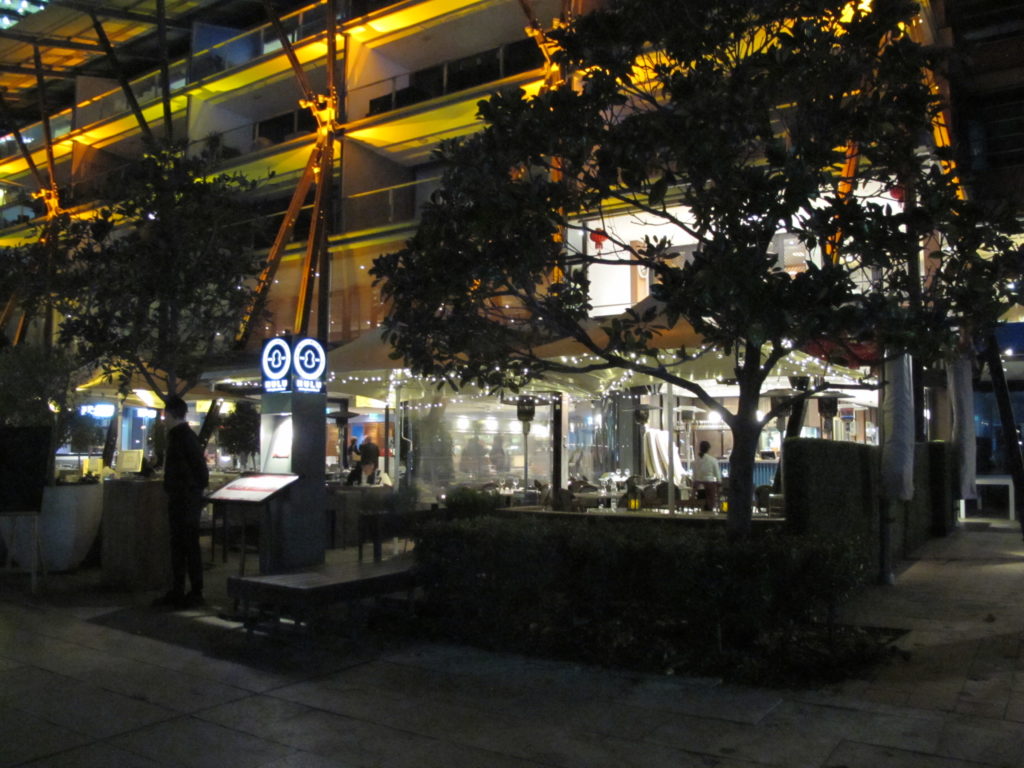
 While they’re promoting the restaurant as fusion cuisine, I thought it was simply good Chinese food, leaning towards the north of the country rather than Cantonese-style, and with a few twists.
 It’s a 200-seater. There’s a downstairs, which looks pleasant enough, with a view out to the water, and an upstairs where we were. I’ve always found the venues at King Street Wharf a little strange; they don’t quite escape the touristy feeling of Darling Harbour, like the ones further down at Barangaroo have. The ambience here feels like it needs settling in; some purposeful music rather than random tracks from a waiter’s phone, and definitely softer lighting.

We really got treated to a feast.
 The cold entrees came out in a tower of porcelain whereupon it splits into three bowls: a delicious cold chili chicken, cold and creamy cucumber, and some delicious spinach. The chicken was the highlight for me.
 Some interesting dumplings next. The wrappers were fried, and of glutinous rice, and a nice gooey inside.
 One filling was cheese, which is unusual for Chinese food, but mixed with the usual ingredients, didn’t taste too unusual for me.
 The disturbing goldfish dumplings (“Nemo dumplings”) were tasty, and amusing.
 The prawns were delicious, perfectly crisp, and with pineapple, or perhaps oranges (I just went for the prawns).
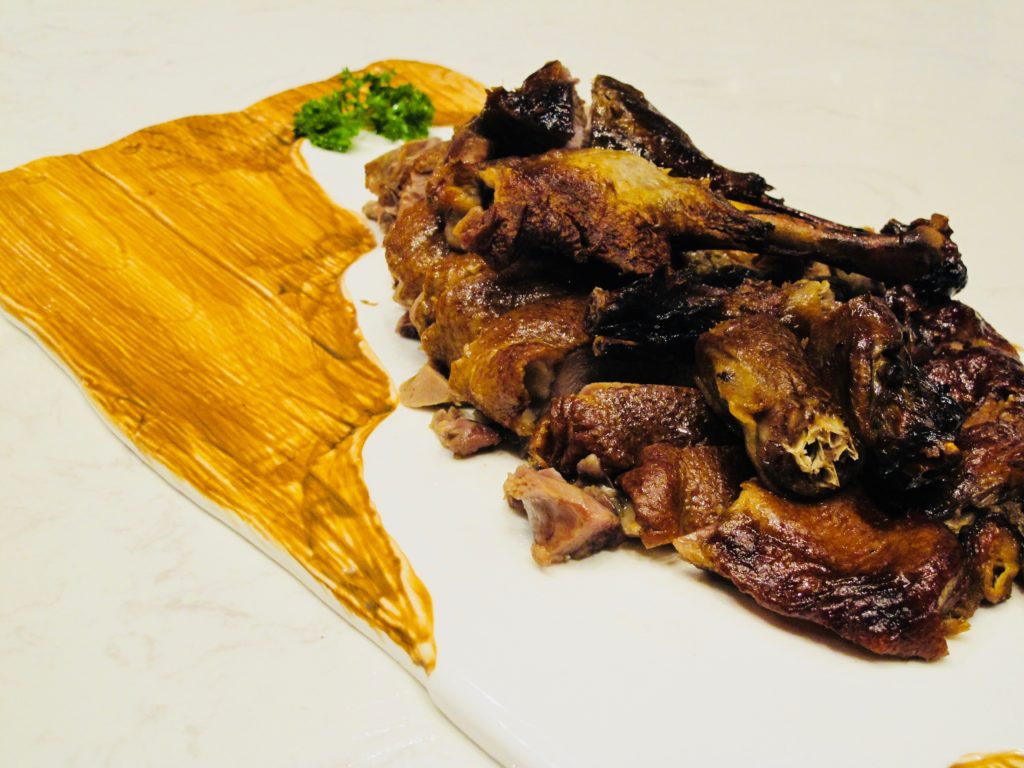
 Tea-smoked duck (oolong) had apparently been prepared over days. I found it quite salty.
 Johnny explained that his technique for sweet and sour pork is to use ice… which makes the batter even more crispy. It was crispy, though this one seemed a bit tricky with the bits of fruit and the ice cubes.

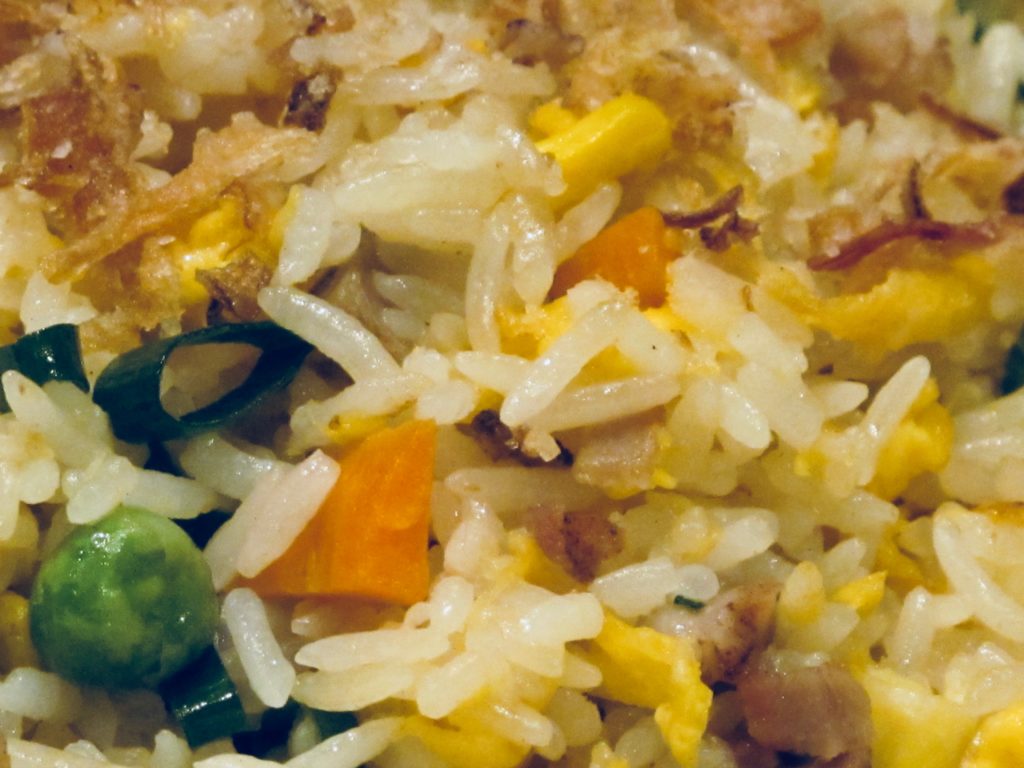
I always think fried rice is interesting at classier Chinese restaurants because it’s such a standard dish everywhere, how do they elevate it? But they do.
 I have to admit my favourite fried rice in town is at Din Tae Fung. It’s amazing what you can do with fried rice.
My favourite dish of the night was homemade tofu, deep fried, with a delicate sauce of enoki mushrooms. For me, it was perfect; tasted like a humble, village dish that had been elevated.
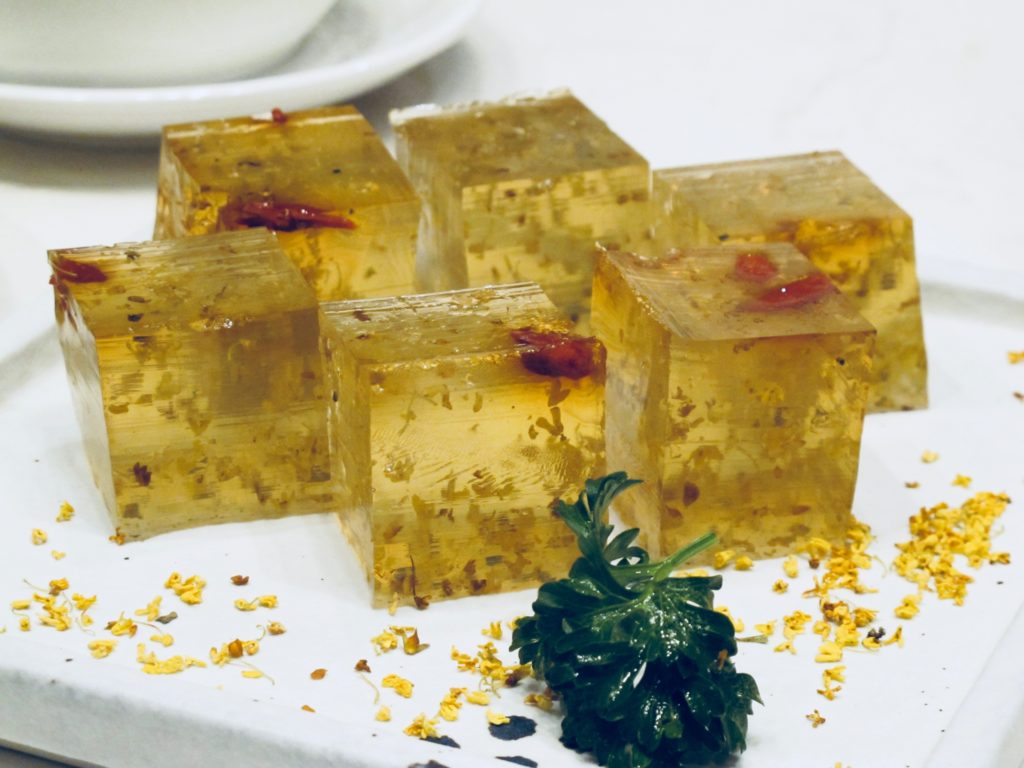
 For dessert, there were three. An osmanthus jelly, one of those strange Chinese textures of desserts that aren’t too appealing to the Occidental tongue. Very pretty and visual though.
The sweet wintermelon soup was a hit, surprisingly. I thought it would be a bit weird for others at the table (I’m used to weird-arse Chinese desserts) but they all liked it and found it very refreshing.
 The highlight of course was a deep-fried ice cream with a white chocolate shell that melts underneath the hot chocolate sauce.
 More than a gimmick, this really was tasty.

All in all, it was quite a night. Thanks to Johnny and his team for their generosity. It will be interesting to see what kind of crowd Hulu pulls, and I’ll be interested to see if any of the fusion ideas become more pronounced. Why not drop on by and give them a try?



 I had a set menu with tonkatsu with Japanese curry. There was a delicate set of appetizers, a chilled vegetable and two dumplings, and then a bowl of their famous coleslaw, which is just white cabbage that is sliced so finely that combined with their signature sesame seed salad dressing is amazeballs. I’ve tried to slice cabbage this thin, in imitation, but even trying various kinds of Japanese graters, I couldn’t do it.
 You also got bottomless Japanese ice tea (unsweetened, hurrah) and a choice of ice cream or almond pudding for dessert (I chose the latter).
 I like the Australian word ‘spruik’. Except I’ve been pronouncing it wrong. It’s sprook, rhymes with Luke, not sproik, rhymes with… well, not anything I can think of.
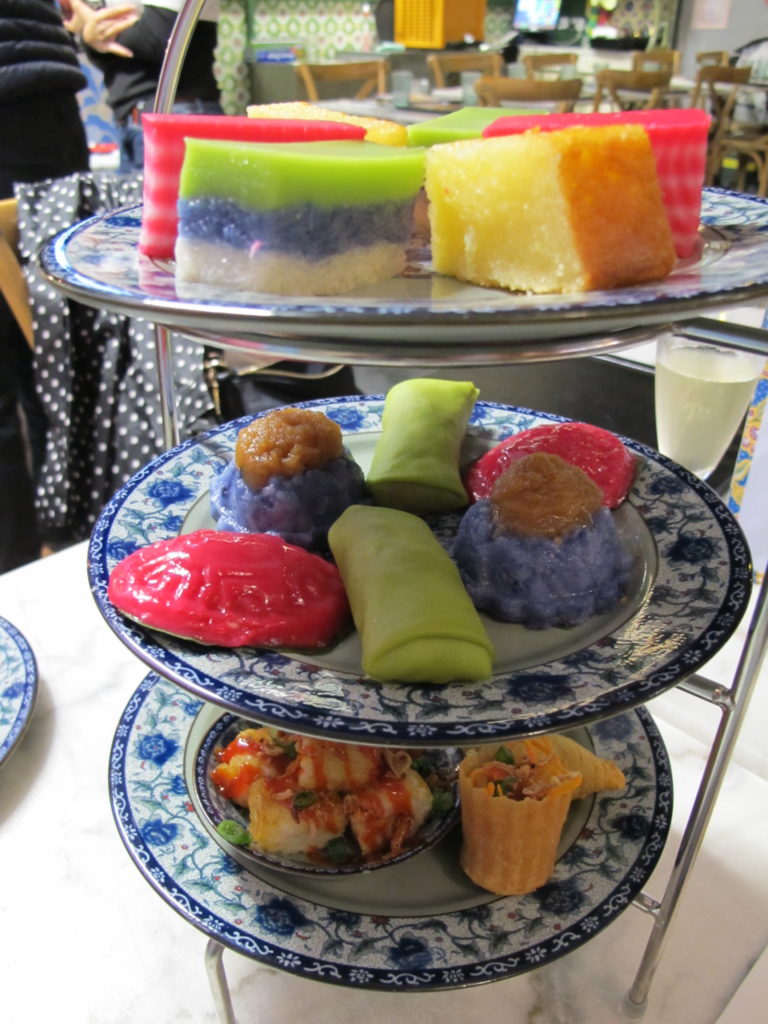
 In any case, if it sounds like I’m spruiking Nyonya High Tea at Ho Jiak, my new favourite restaurant, it’s because I am. You can stop in here on an afternoon on a weekday for bubbles and Malaysian snacks, a few favourites and mostly sweets. You could also actually have tea (or the Malaysian mixture of tea-coffee that I’ve never really inclined towards) but hey, why would you?
 The idea of it, really, is pretty wonderful. I’m up for bubbles anytime (in this case, it was a basic and tasty Australian drop, the Brut Carview Marview 2003 from McWilliam’s) and I like Asian snacks. While I’ve tried a few of these already at Ho Jiak, I haven’t tried all of them, and my Malaysian friend, an expert in Nonya cuisine (Malaysian cuisine with a Chinese heritage, her grandmother made it) and I chowed down. It was a very, very pleasant afternoon.
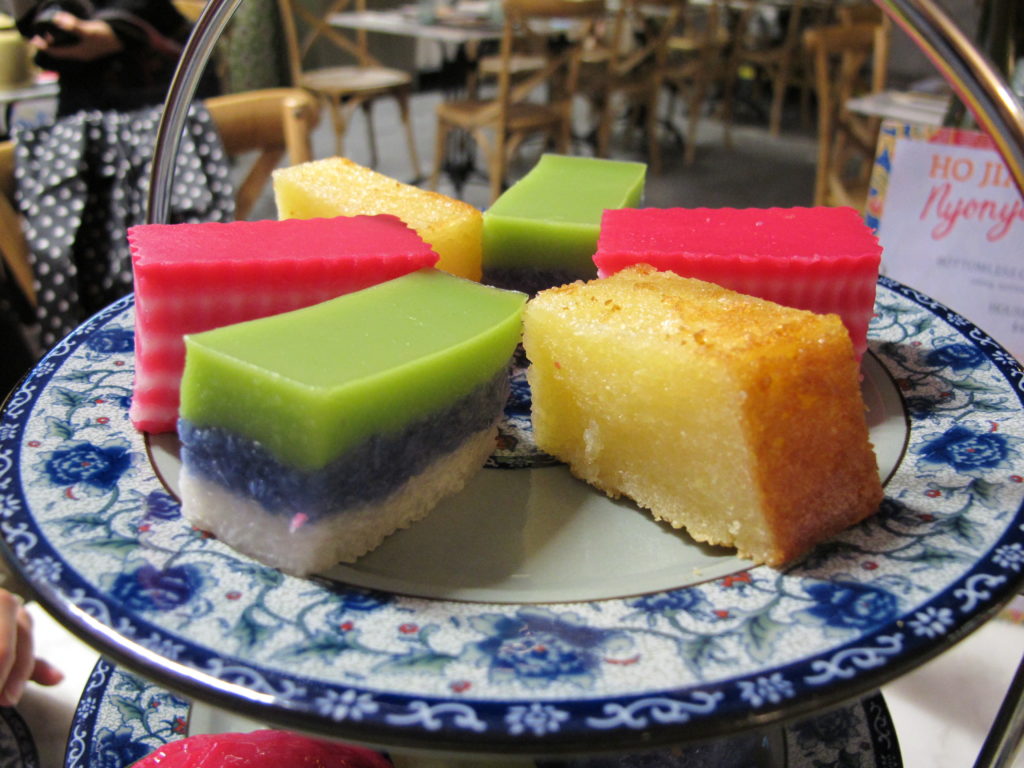 $25 for bottomless tea and coffee, and $40 each for bottomless bubbles… along with these lovely plates of delight. Special mention this time to the one with the blue rice and coconut jam on top. Scrumptious!
 In the meantime, Ho Jiak seems to be preparing new menu items. I like that they’re always trying to do better, and make more interesting dishes, and shake things up. There seems to be a real commitment to quality and innovation. I’m looking forward to the next meal there already.
 Since Sydney is such a fast-moving and trendy place, it surprises me that a café like Le Monde can keep going, with a good reputation and buzz, after more than twenty years. I certainly remember it from my early days in Sydney, and a period when they were doing coffee tastings, I believe. It’s been so long since I was there last that I wasn’t quite sure what to expect when I suggested it to catch up with my pal D. Would they have changed hands, as seens frequent these days? Would the food be any good?
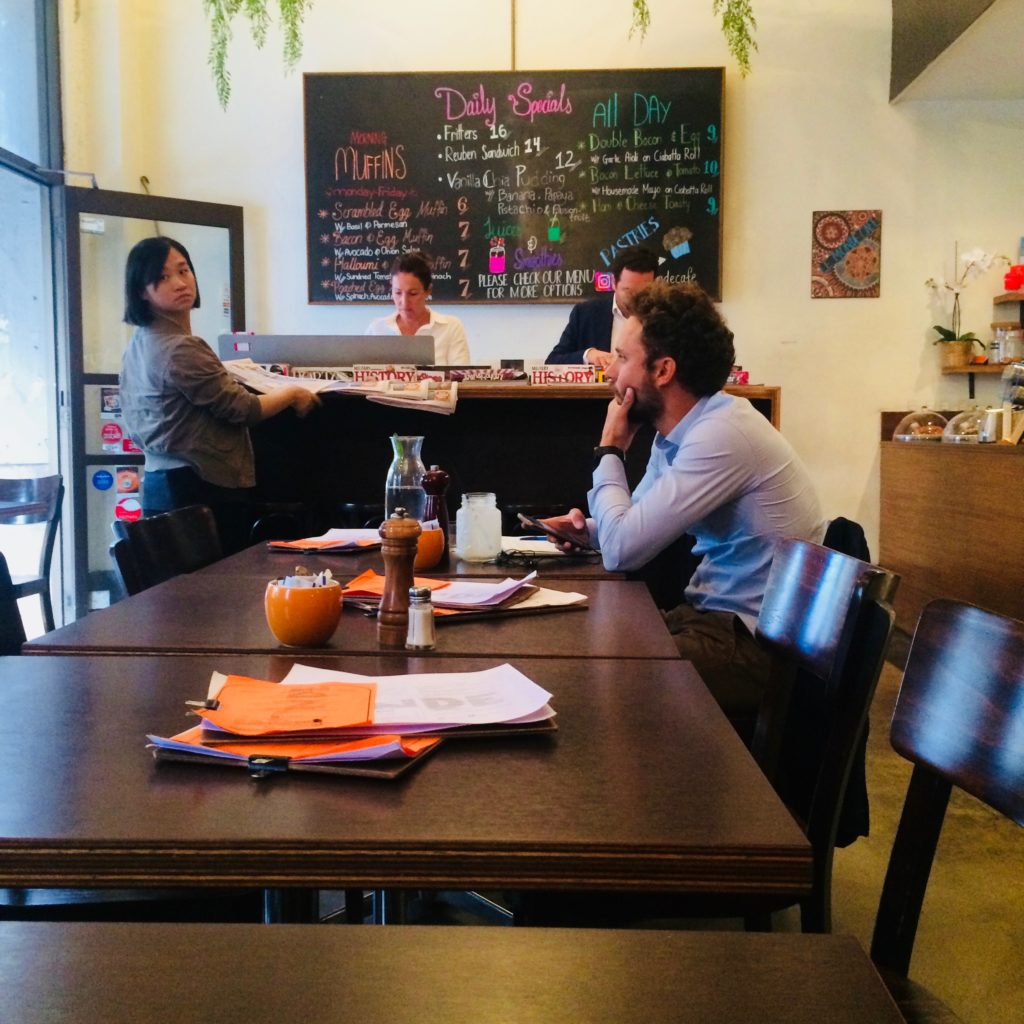 I’m happy to report that the food was wonderful as was the coffee, and the ship still seems to be steering straight! My zucchini fritters (top of the page) were wonderful not only because the fritters were tasty but because of the combination of deep-fried chickpeas, a poached egg, a creamy lovely hummous, some charred cauliflower and a handful of rocket leaves. Really, really good.
 The coffee was not only tasty but look how pretty it is. It really makes it hard to make do with mediocre coffee without coffee art when you get something as beautiful as this.


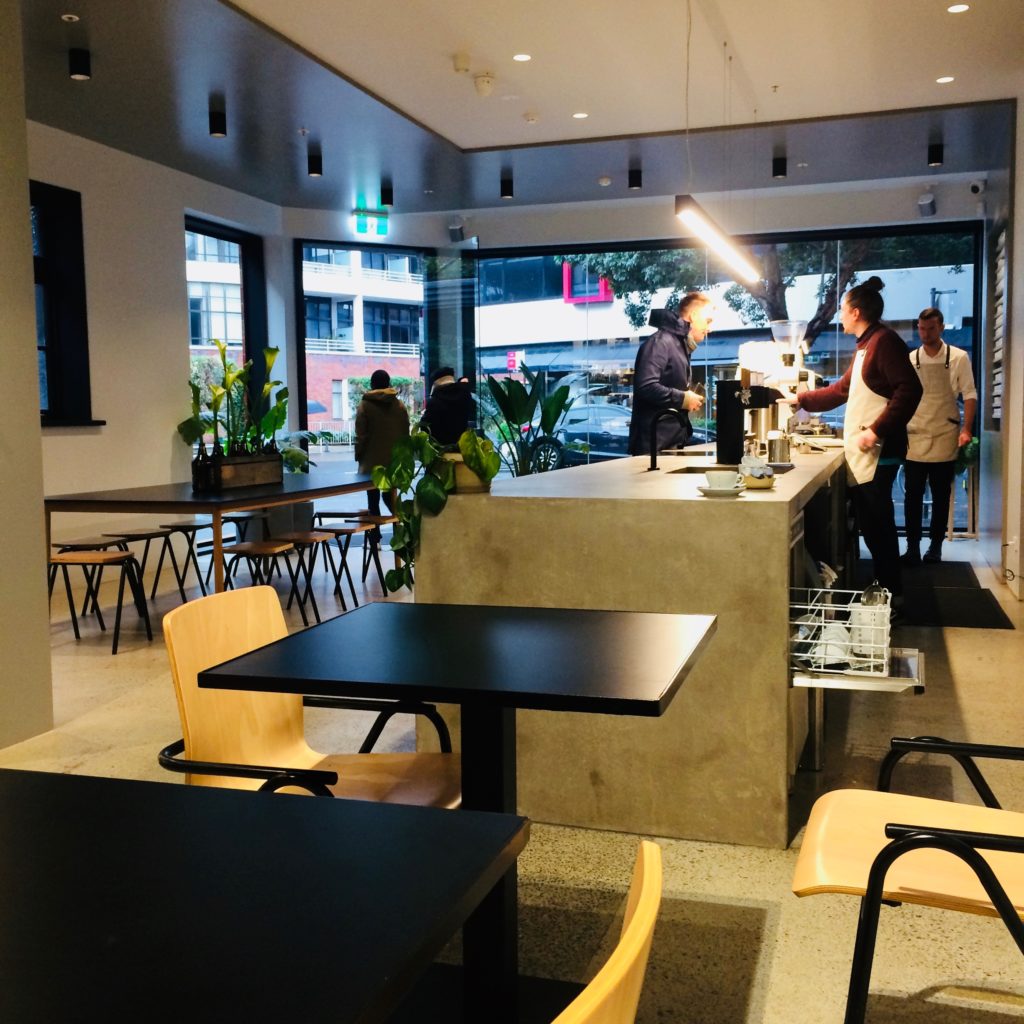 Taking over the space from the trendy and expensive clothing store, The Stables, on Bourke Street, next to the Beresford Hotel, is Veneziano Coffee Roasters, opening in Sydney just a few months ago, after establishing themselves in Brisbane and Adelaide. Good coffee is pretty easy to find in Surry Hills, but I was definitely curious to try them out: the store fit-out is open and airy, mostly concrete with some Scandinavian-looking blonde wooden chairs and very good lighting. It still looks like it could be selling you a very chic and pricey dress.
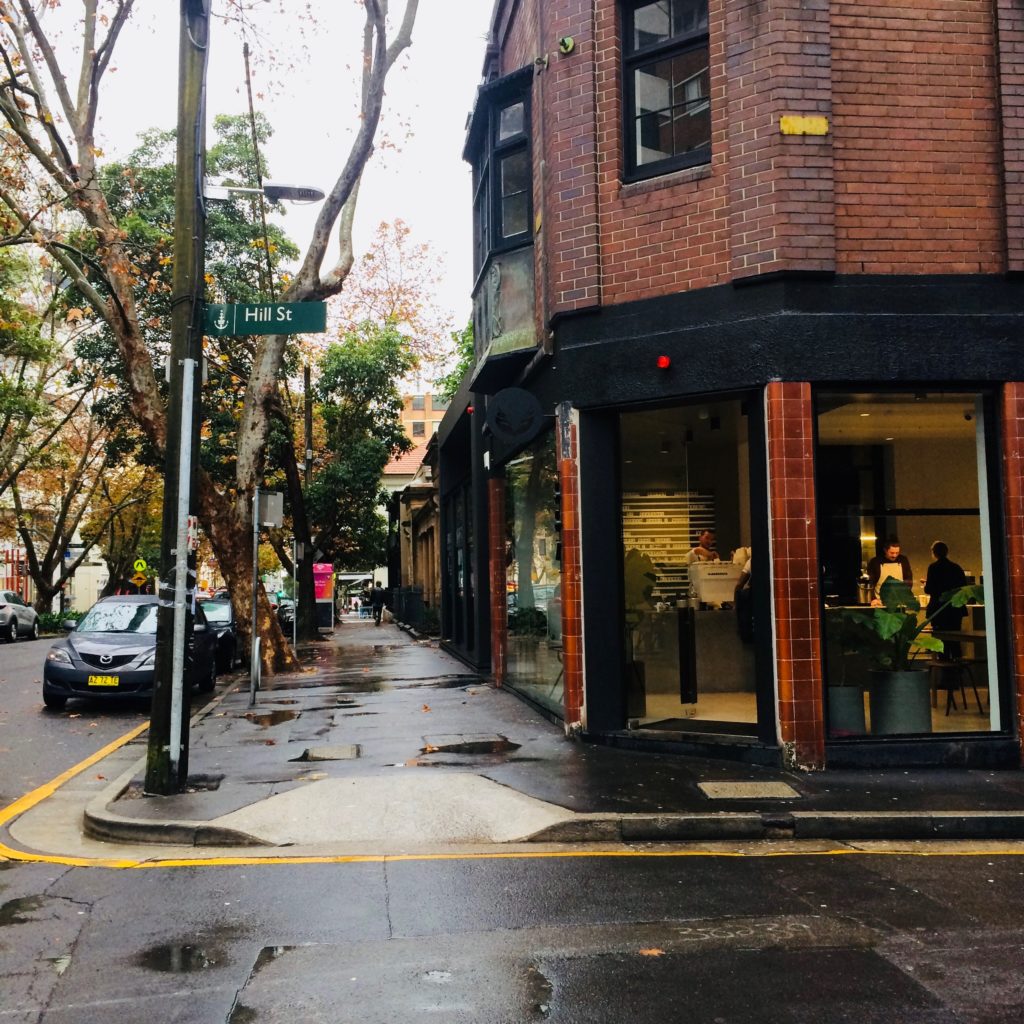 But wow: I experienced so much pleasure in a short time. I liked that I was offered two choices of coffee for my latte, and went for the more unusual Ethiopian bean. There was only one size, but cheap, for Surry Hills. Under four bucks.
 And then, free sparkling water. I love for free sparkling water. To top it off, as I’m about to leave, I see they’re selling coffee merch, too. And they have the most beautiful coffee mugs for sale, by a Lismore artist,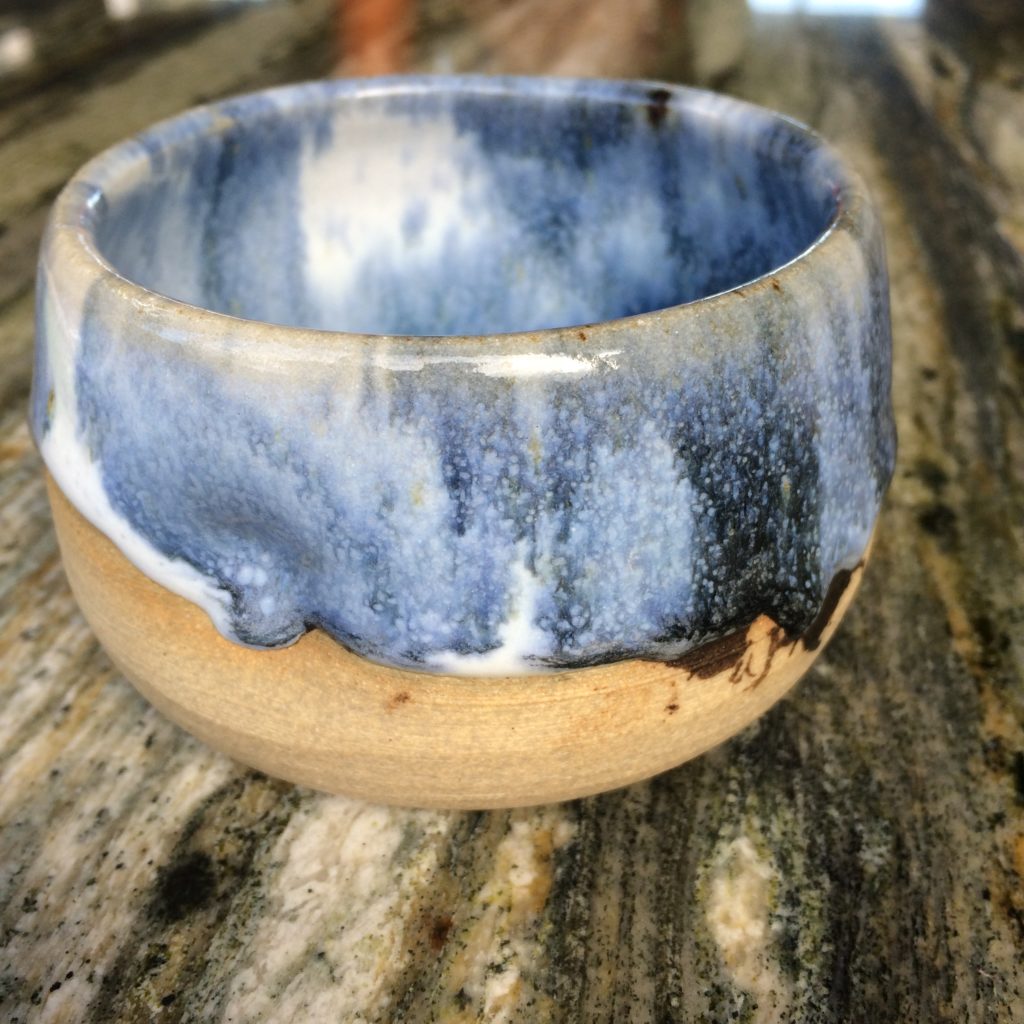
 So, really I should have taken a photo of the crowds. Ever since Ovo Café opened up in Oxford Square, there have been crowds. And then they expanded and made the space bigger with the renovation of the whole shopping complex. And it’s even more crowded than before. On Sunday, I passed by at 2pm, when I thought the lunchtime trade would be over and there was literally 20 people lined up. It was like an event was happening there.
 It took D and I forever to try it, just because of the crowds, but we were up early enough on a Sunday morning and snagged a last table. We weren’t feeling up to their usual Sunday buffet, and initial skeptism at the very limited breakfast menu (when you’re not having the buffet) gave way to being rather impressed. We both had variations of smashed avocado, his with salmon ($15.50), and mine with feta cheese ($14), both with tomatoes and rocket. They were just the right combos of everything, a generous amount of rocket with a nice, light dressing, very tasty and fresh, and yes, our waiter was very charming.
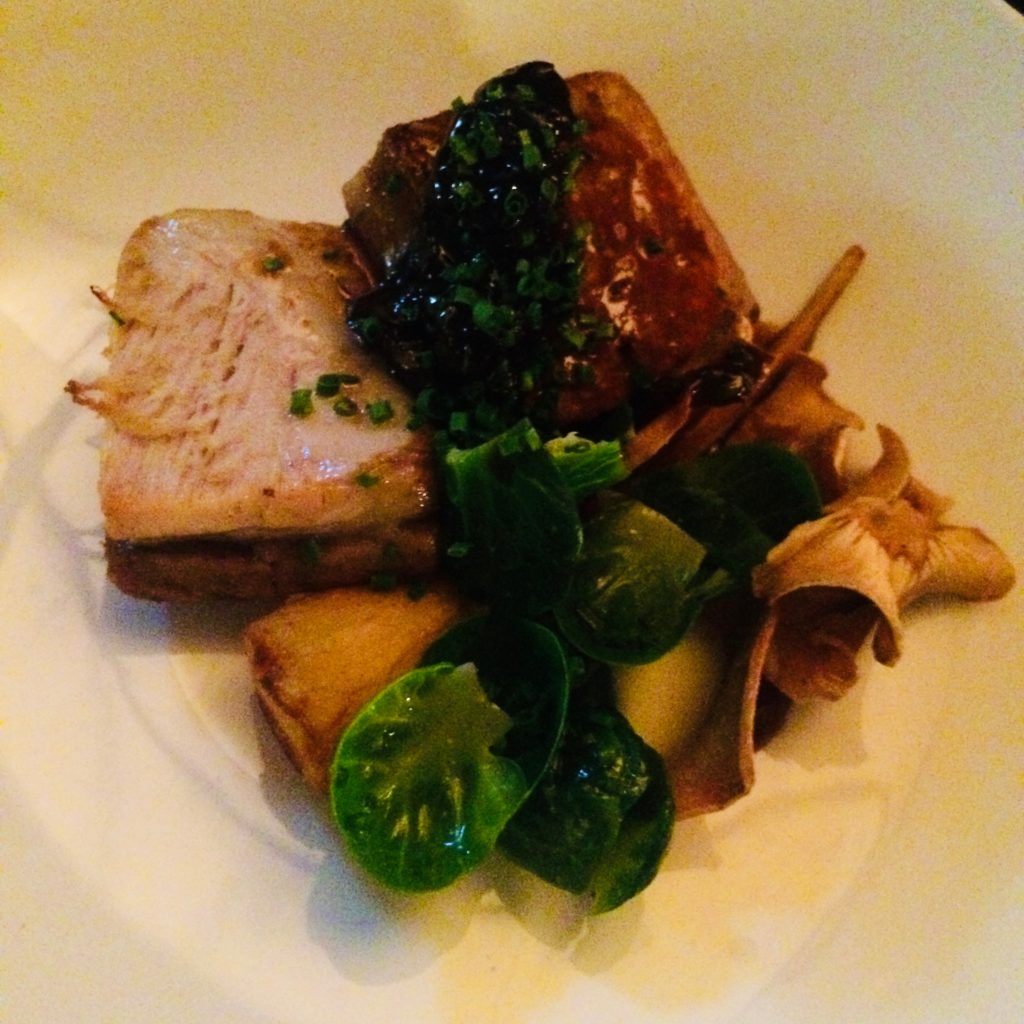
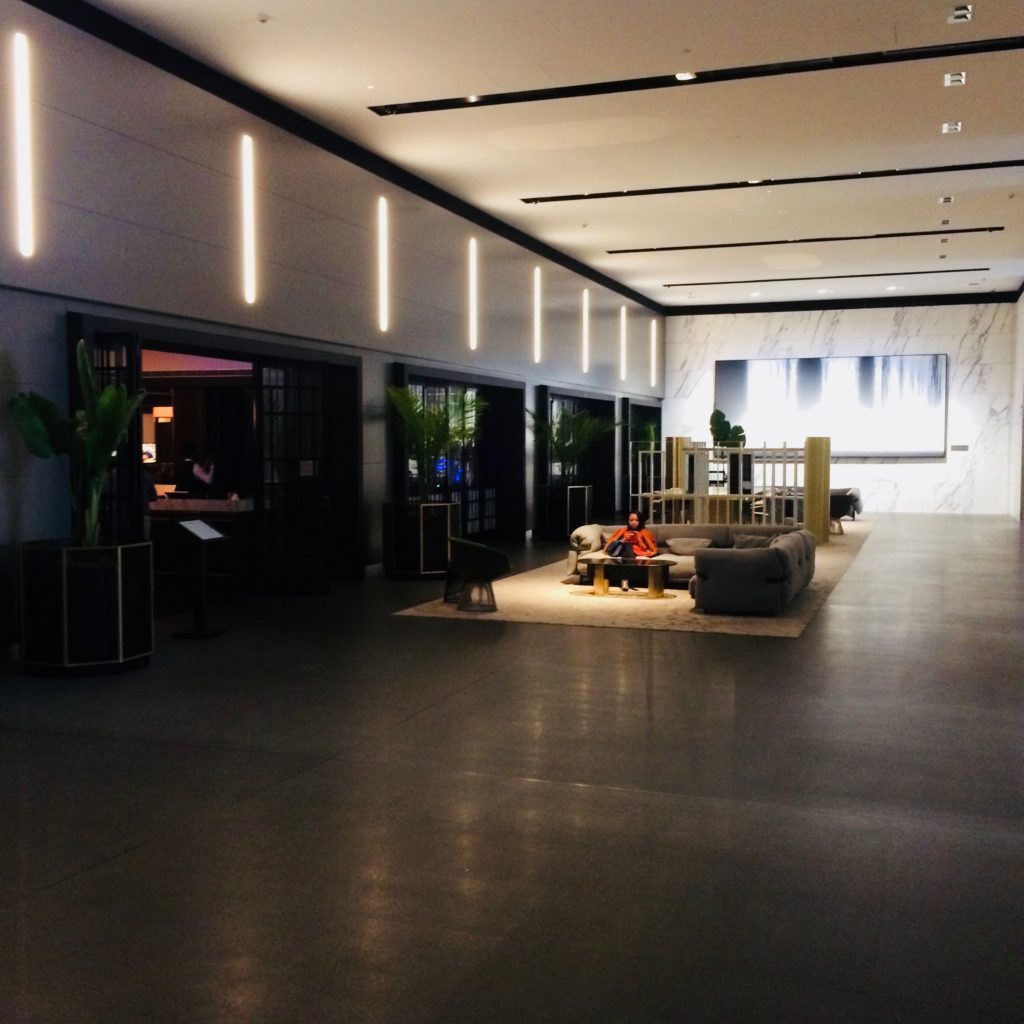 Love the decor and feel though: it’s the idea of a French bistro translated into a chic, contemporary setting. I also thought it was an interesting mix of luxury and down to earth. We had as entrées a pork belly dish (with prunes, parsnip cream and brussels sprouts), $21, which was simply superb.
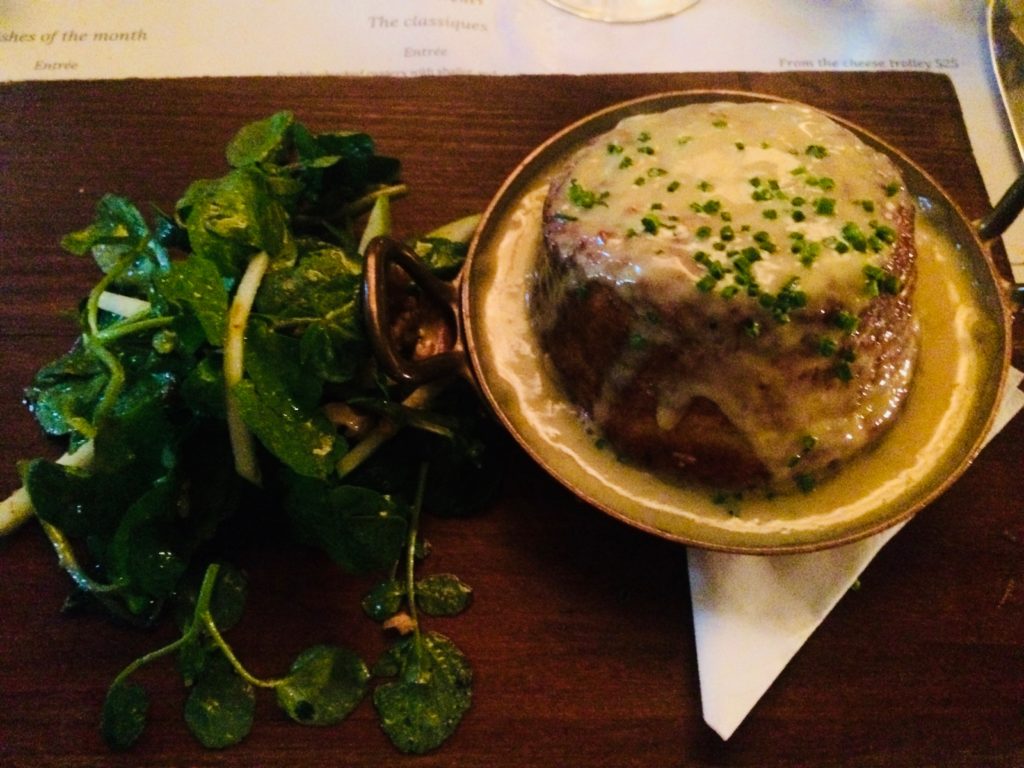
 And the twice-cooked cheese soufflé ($20), which I couldn’t resist, but surprised me with a rich roquefort sauce (as if the rest wasn’t rich enough) and a perfect mix of greens on the side.
 For the main, we went for a dish from the dishes for two section: Duck Parmentier ($79), which is basically a shepherd’s pie with duck instead of minced beef. Very homely in some ways, but this was pretty deluxed. We liked it.
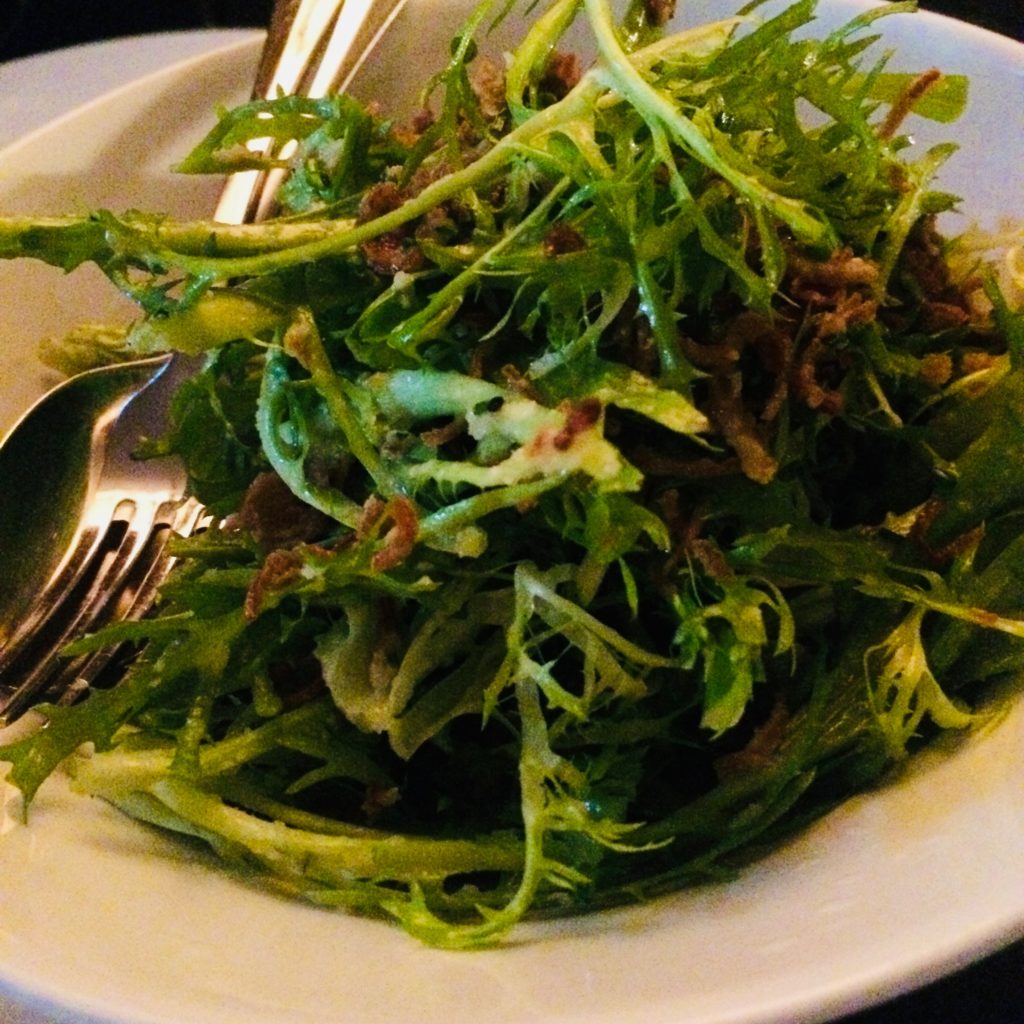
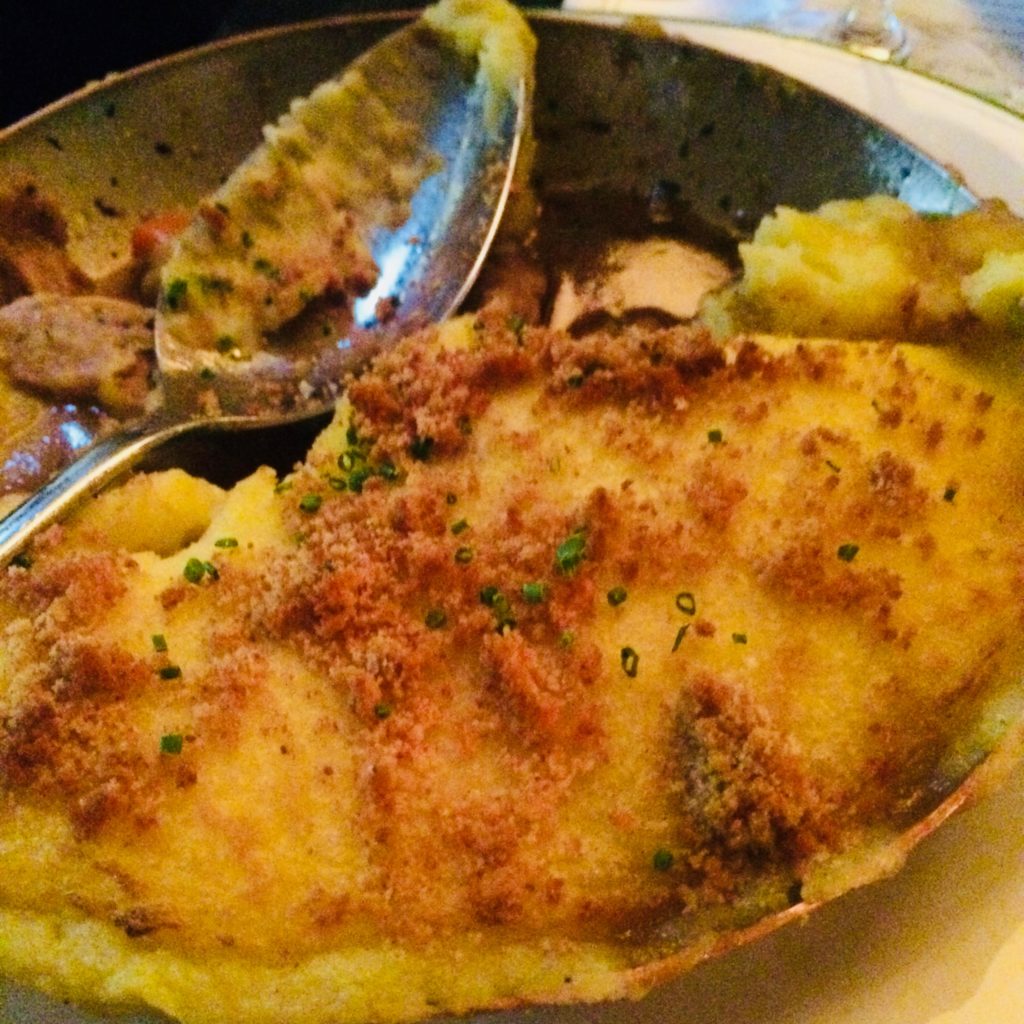 It came with another nice salad on the side, which was welcome.
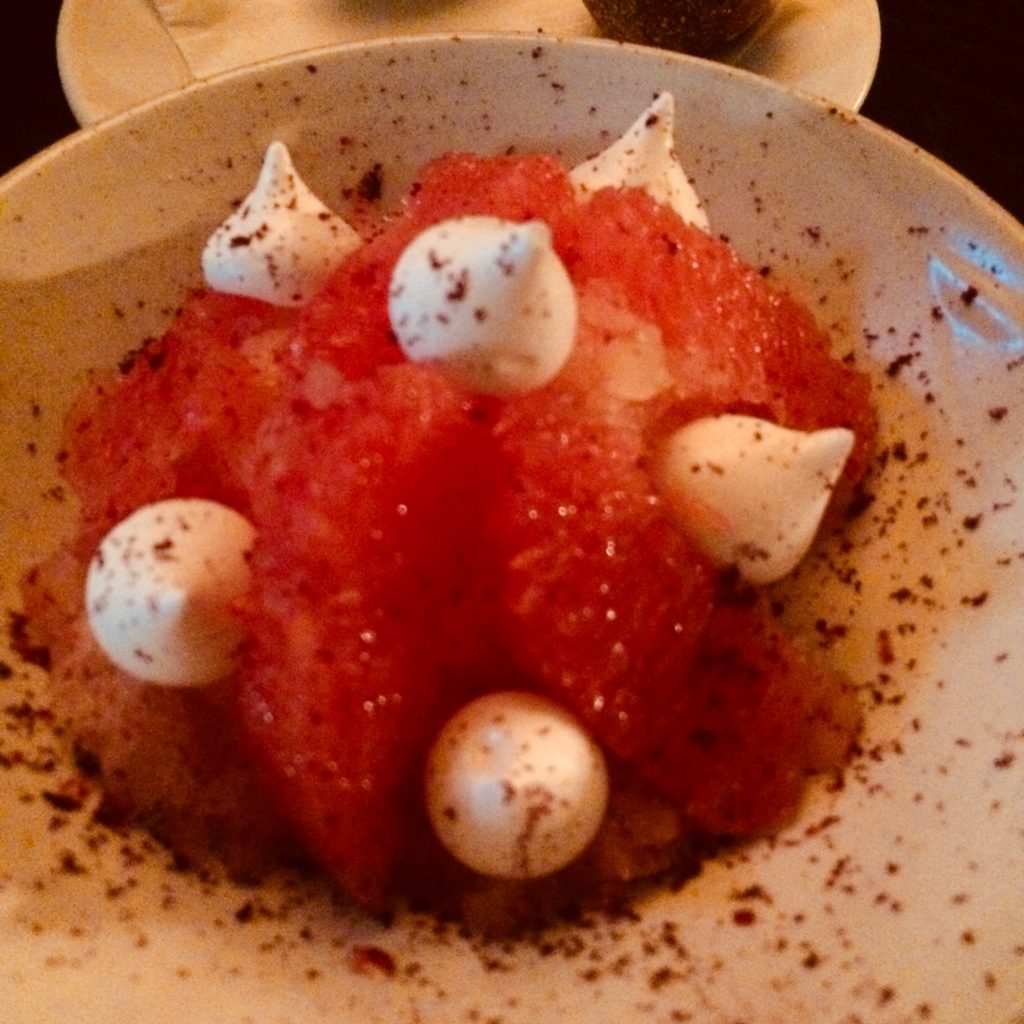
 We were going to actually split a crème caramel, but they brought us out a portion for two, plus… two donuts and a grapefruit granita. My better half commented that a crème caramel is such a perfect food, why mess with it, and I’d have to agree. I’m not sure how well they all went together.
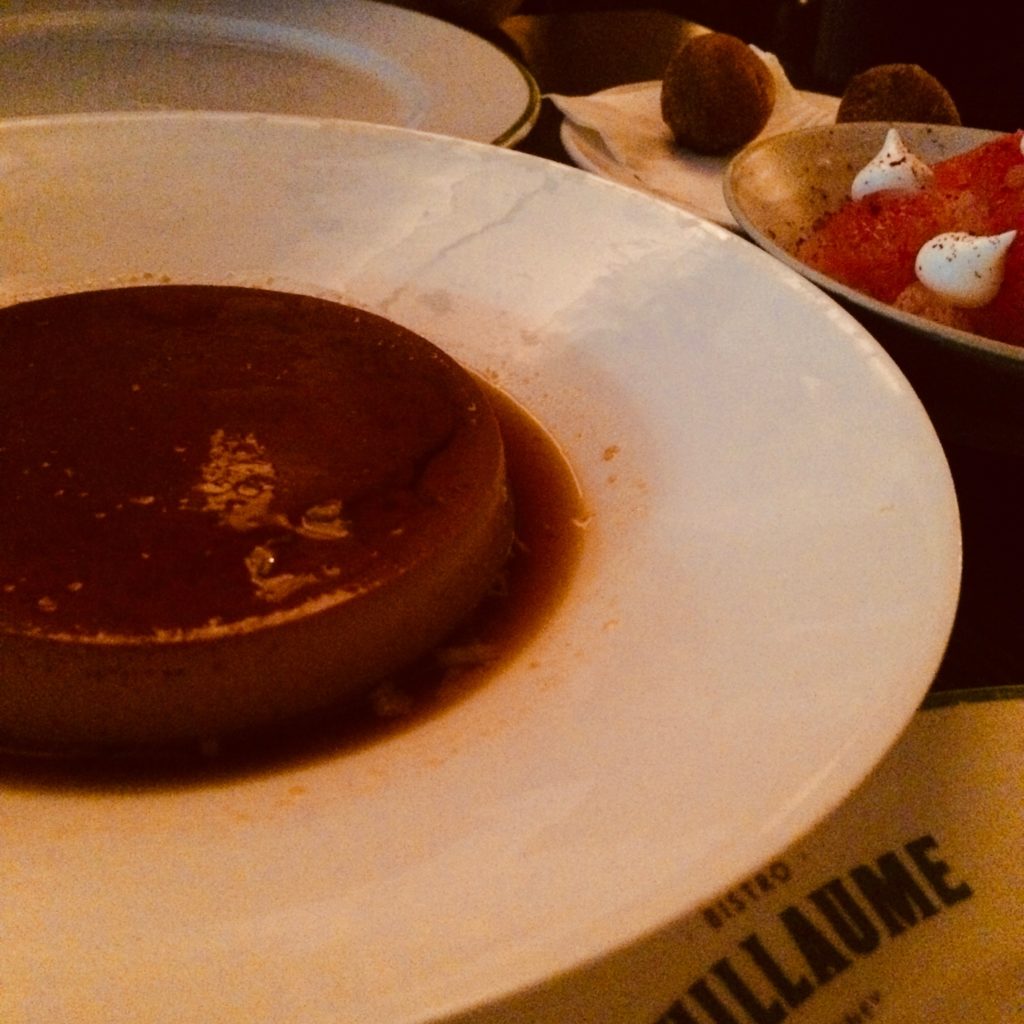 And didn’t Bjorn have a hairstyle like this?
 Service was a real mix too. I thought the Colombian waiter was charming and warm, but everyone disappeared for quite a while when we wanted to order. Then there was a whole team making sure the dishes came out and were served nicely and the wine poured. Oh, an aside: amazing wine:
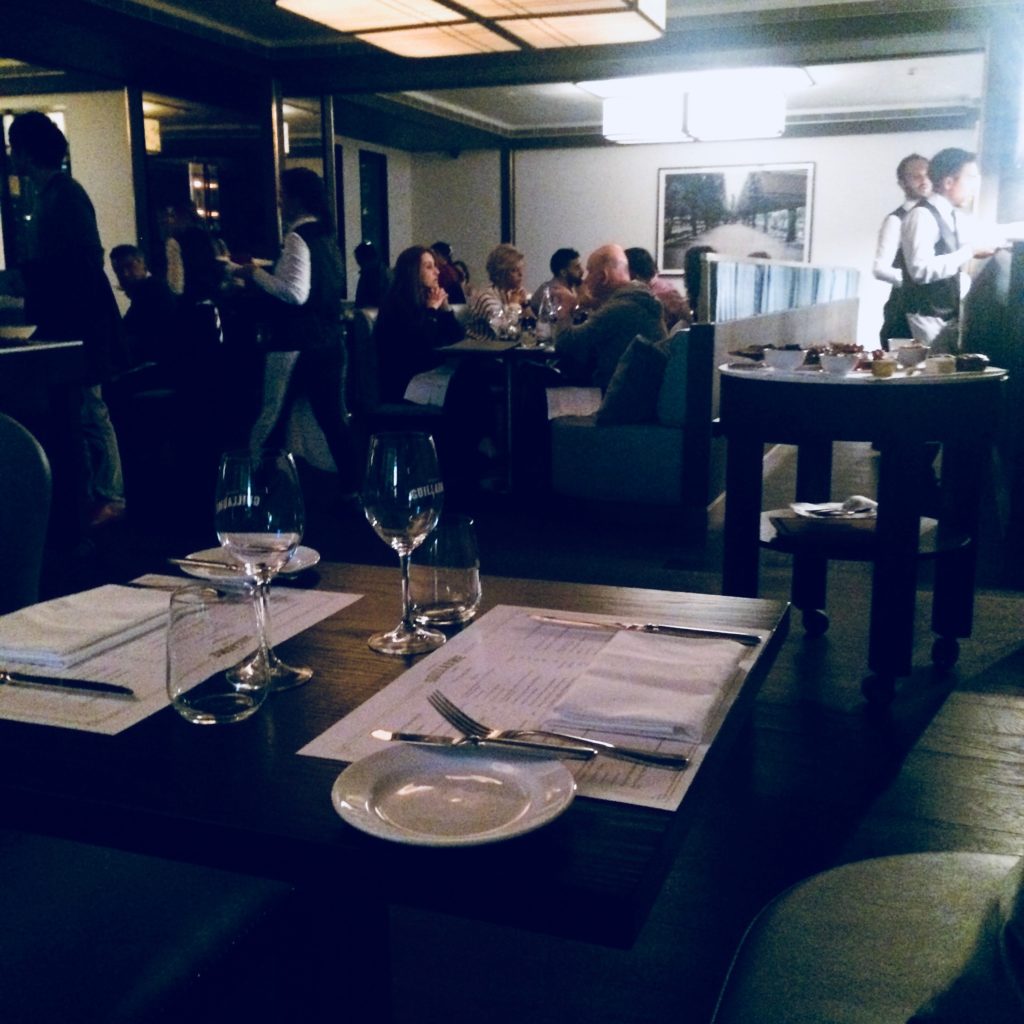 And then, after being treated to good service, I tried to get the bill. I think this was my fault as I thought I would cleverly ask for la cuenta, but the waiter didn’t hear and then disappeared and it took so long to get the bill I wasn’t sure if my hubby wasn’t going to spit the dummy. But these minor instances didn’t take the shine off the night. I enjoyed our date night out very much. I think this would make both a fun night out with a larger group, and a venue for a special occasion.
 For a quick bite before we saw ‘Gypsy’ at the Hayes Theatre, I suggested Friggitoria. I reckon it must be good when there are always so many people there. But alas, there weren’t two empty seats. So we popped next door to what seems like a new place, Retro Saigon, an offshoot of a mothership in North Sydney. By the way, I think this paint effect on the chipboard is pretty good!
 It’s super-casual and quick, but was basically what we were after. It’s basically a takeaway restaurant with seating so you won’t get plates and cutlery! Well, plastic cutlery.
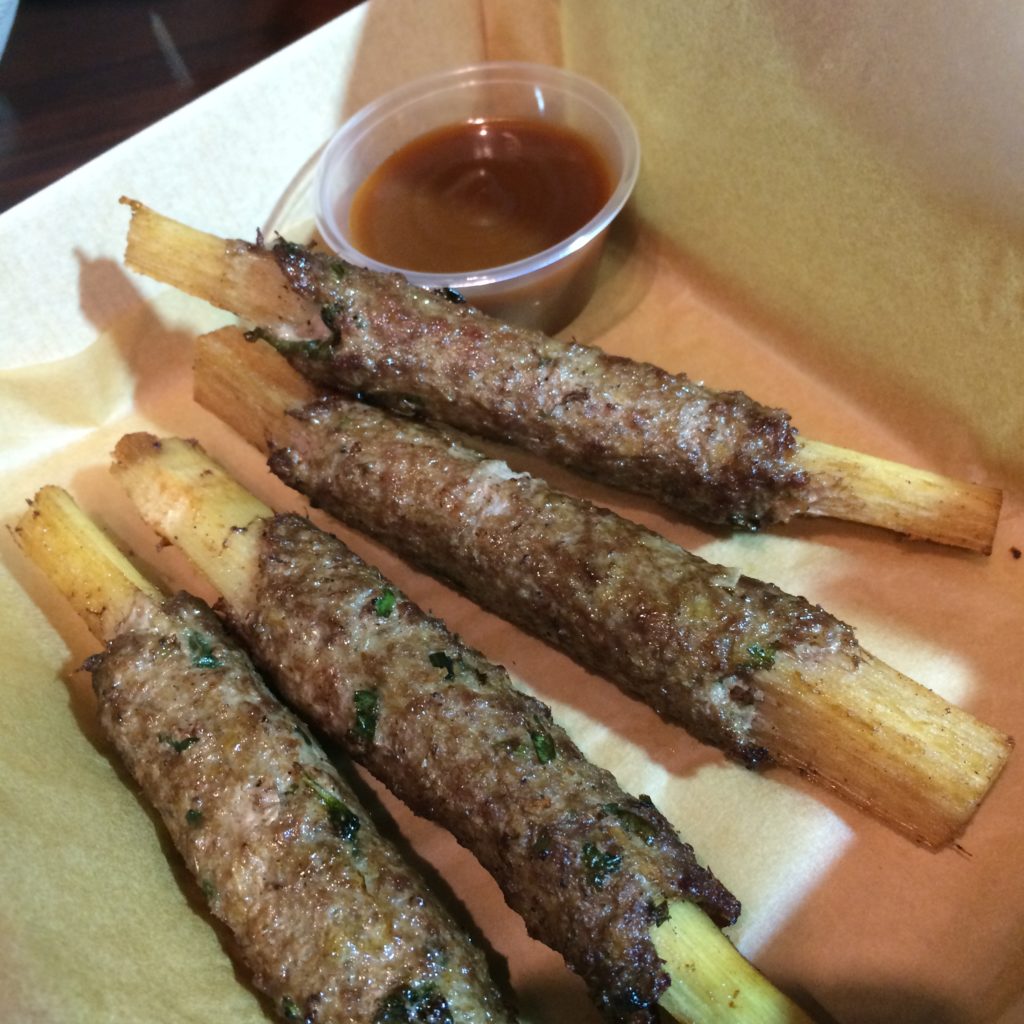 I thought the chicken curry didn’t have much more than sauce, even though it was tasty, so not so generous on the chicken.
 The salad with prawns was a pretty much perfect mix of textures and ingredients though.
 With intrepid friends D. and R., we managed to get in on a Sakenet Australia event, at Ume Burger, which focused on aged saké. Apparently, the first event was young sake, about a month ago. So, there were 13 of us in the back room of Ume Burger, and Rey took us through a tasting of six sakes (officially five) and then we sat down to a feast of food and more sake (I knew there were burgers, but this turned out to be a nice spread).
 It was very interesting tasting these warm too. I couldn’t figure out how to describe them when warm (alcohol soup?). I’d always heard that saké is best cold and they heated it up to disguise when saké is of cheap quality. But Rey explained that saké went through different historical trends. Before the period of the samurais, you drank saké hot half the year (when the season was cool) and cold when the season was hot. Then, it became fashionable to drink it hot all year round (as the Japanese were drinking everything hot: like tea). Now, it’s simply a preference. My friend R. was enjoying the warm saké better; I like it room temperature or cold as I can recognise the flavours more and it tastes to me, more similar to, say, a white wine.
 While I knew we were getting burgers after, I didn’t expect such a feast, for accompanying the burgers were edamame, delicious fries (in miso salt?) and super crispy brussels sprouts. And the rest of the saké! It was really a fun and educational afternoon. Check out