 Considering myself a labyrinth aficionado – a longtime user of the one in Vancouver, where we were married just after Christmas; and having walked the one at Grace Cathedral in
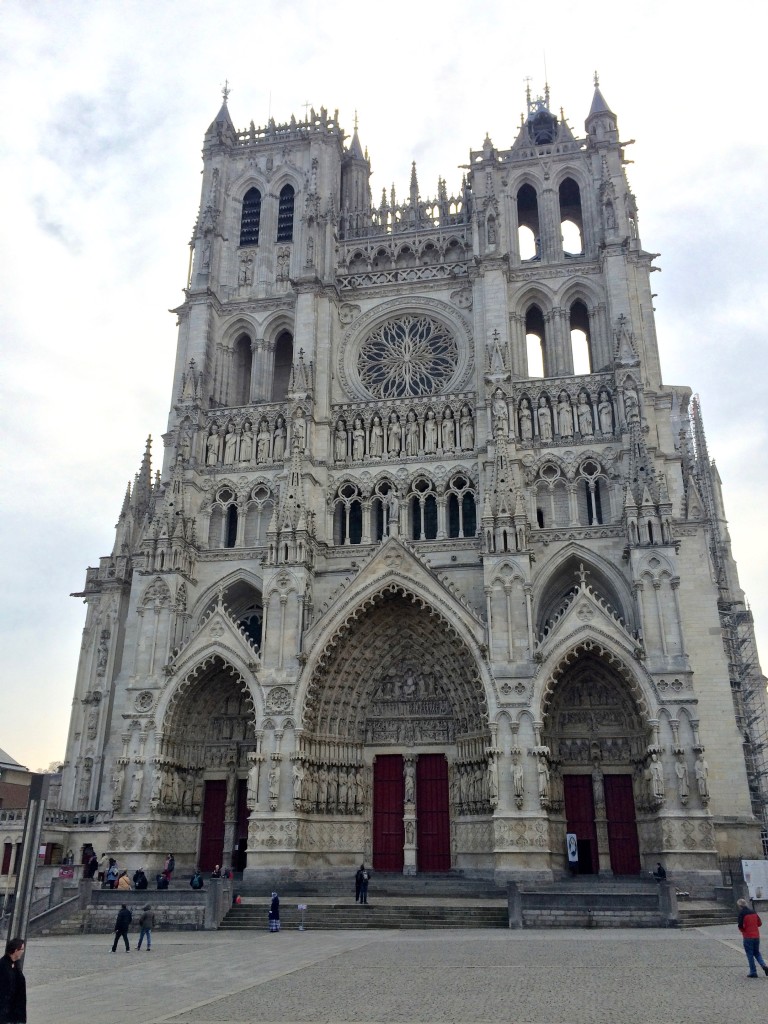
  San Francisco and Chartres in Paris (the original!); and so pleased to have one now in my home city of Sydney – I was surprised to visit the Amiens Cathedral and find a major labyrinth in the middle of it.
There is a small plaque on the wall explaining its history, but other than that, no special promotion or instructions, and in fact, although S. figured it out right away, where to start, and that you followed the darker path rather than the lighter one, it’s not evident right away.
 A shame as I think with some encouragement and explanation, the many tourists to the cathedral could have a nice introduction to labyrinths, a beautiful ancient tool for contemplation and meditation, and a fun thing to do for kids too!
It’s also cool that it’s open, not covered with chairs, and I would assume available for anyone who wanted to walk it at any time. It’s a 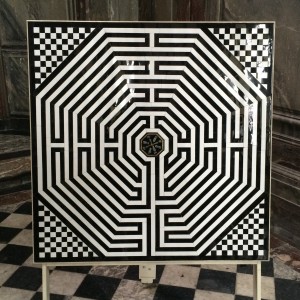 shame that the one at Chartres is only available to walk once a week on Fridays (though I currently see that the labyrinth is closed completely and won’t be opening again until July 2016)
In the morning, on our first visit to the church, we walked into the labyrinth, and some curious onlookers did stop and notice that there was something notable, and later that afternoon when we returned, I decided to start in the middle, marked with a lovely ornate stone (we saw the original cast in the local museum), and move outwards.
 I do think it’s a special and beautiful thing; this labyrinth compared to the Chartres design feels about a similar number of turns, but is different, and with the square, straight edges
 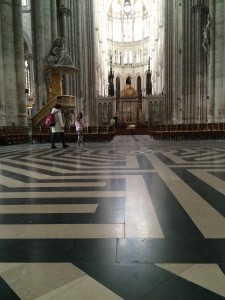 feels different than the round paths of the Chartres labyrinth that I’m used to.
In general, the Amiens cathedral feels a bit dead in terms of energy, such a big imposing space, and it feels more for tourists to visit than for regular use (unlike, say the bustling Sacre Coeur where even with so many visitors, it keeps its sense of being regularly used). But standing in the centre of the labyrinth, which is at the centre of the church, where the central stone was laid in 1288, was a good feeling.
Amiens is just a short trip away from Paris, and makes a nice daytrip. I recommend it, especially if you wanted to do the labyrinth at Chartres and can’t get there on the right day, or during a month or season it’s open. 
 Just over an hour outside of Paris, to the north, is the lovely city of Amiens, population of about 120,000. We were expecting, perhaps, that it would be the kind of place with just
  one tourist attraction (the famous church, as above), but we were delighted to discover a pretty, varied location with just enough to do for a full day (we were there about 9 hours, from 9:30am to 6:30pm, perhaps a few hours too long).
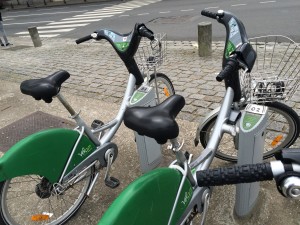 (velos from Amiens); the bikes are slightly lighter than in Paris, newer, and perfectly functional. It made getting around a little easier, and fun.
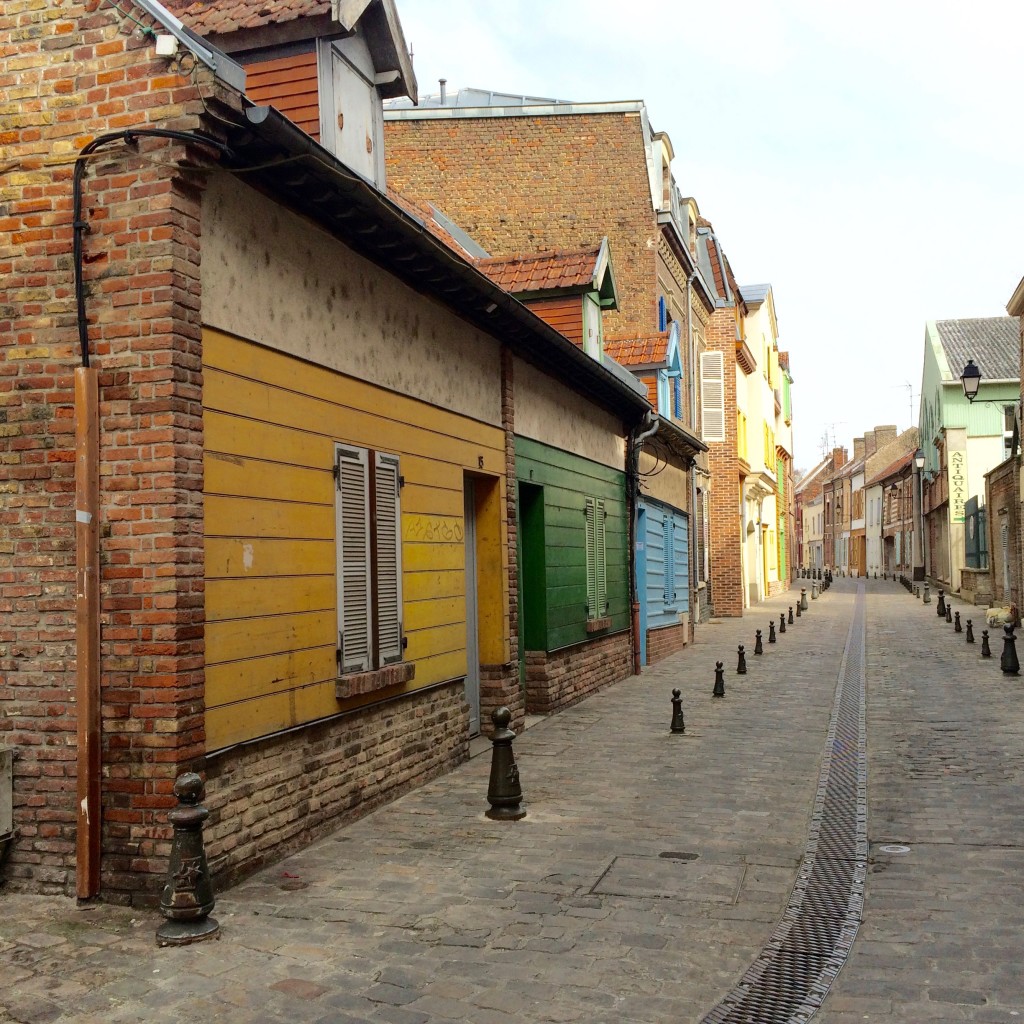 We found the houses charming and the neighbourhoods lovely; some great parks, and one area all filled with canals and houses, like a miniature version of Bruges or Amsterdam
  perhaps.
 actually came out of his house! If I’d have known, I would have either thanked him profusely or pretended to be lost. Thank you, Mr. Donna Lee. What a nice fellow.
 about here
 retailers).

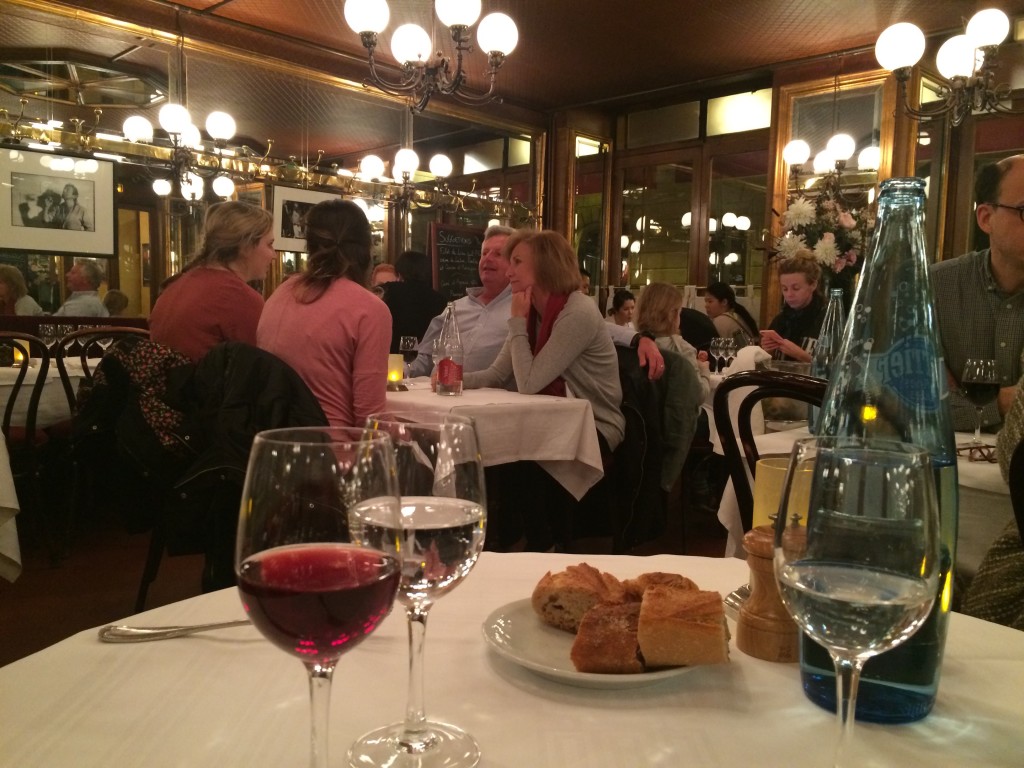
 La Balancoire, meaning ‘the swing’, is a tiny bistrot in Montmartre, on a quiet side street. It was already on a list of restaurants I was meaning to try when a lovely intern at work told me it’s her favourite restaurant. Usually, when I go to a restaurant, the focus is on the food, but this bistrot offered a full package.
 In any case, I had the indecisive starter: a beautiful soup, some delicious foie gras, and an
  inventive salad, full of different textures and deep-fried chèvre cheese. I had the burger for a main, which was a nice gourmet take on fast food: great chips, good-quality meat, a tiny brioche bun with cheese melted on top of it. My better half was pleased with his salad as an entree and confit of duck as a main, falling appropriately off the bone. The only problem is that we were both too full to try dessert…
 6 rue Aristide Bruant
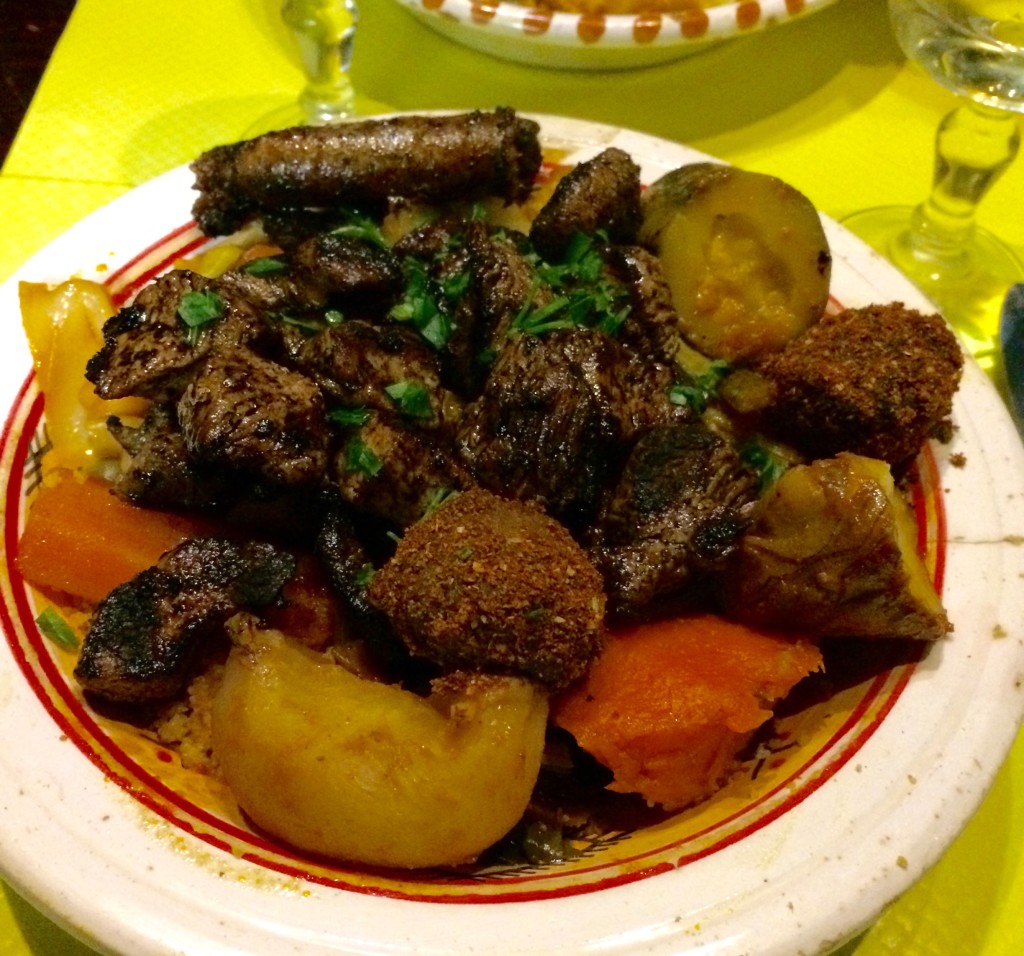
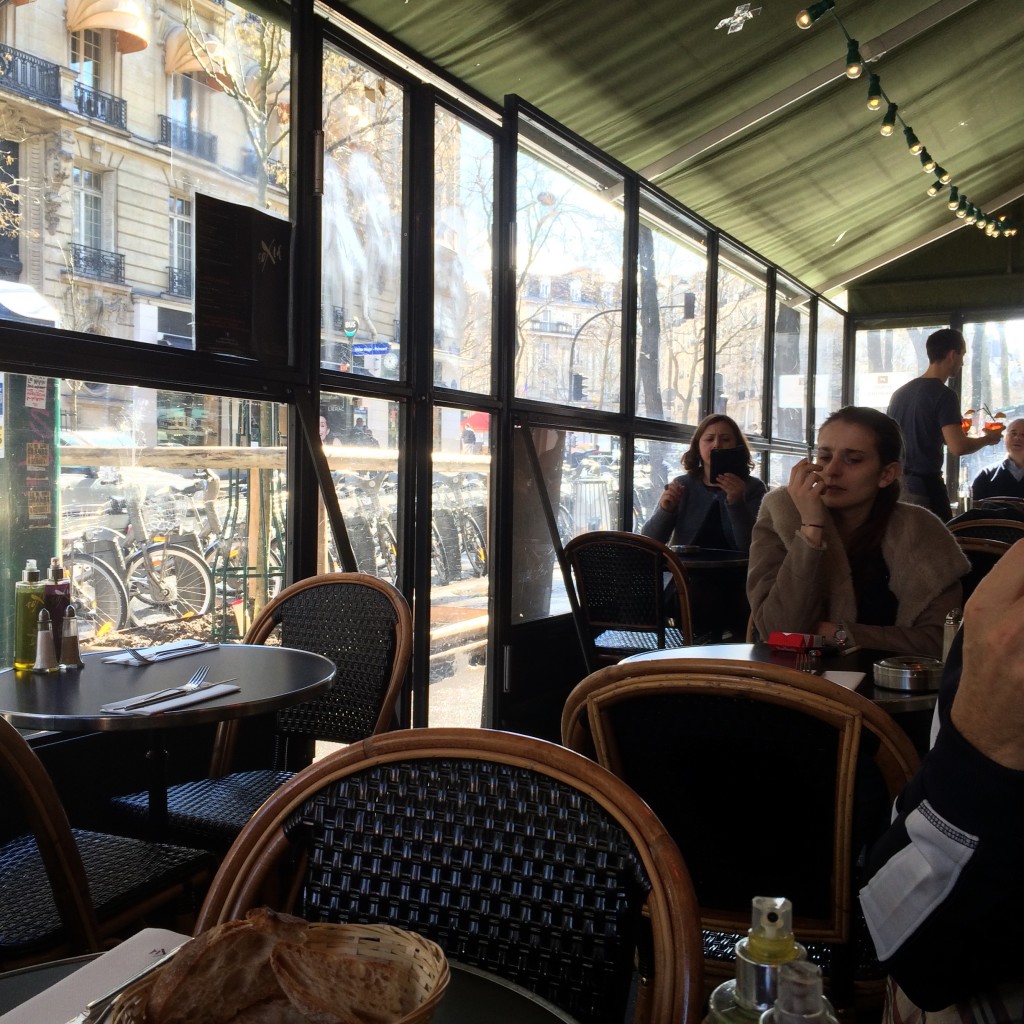 Surprised to find out this is a chain of restaurants. We had a very pleasant and simple lunch the other day, hiding from the rain. As non-Parisians, we still don’t remember that the outside terrace is a cancer cupboard (i.e. for smokers); we automatically think it would be nice to sit outside until the smoke starts wafting over. In any case, my ravioli, a special of the day with ham and cream and peas, was delicious, and my better half’s soft polenta with a truffled egg was especially good. And the prices were reasonable, I’d guess that the bistrots on the corners of Place Victor Hugo would all be charging extra euros for the privilege of sitting in the round… Also: nice service.
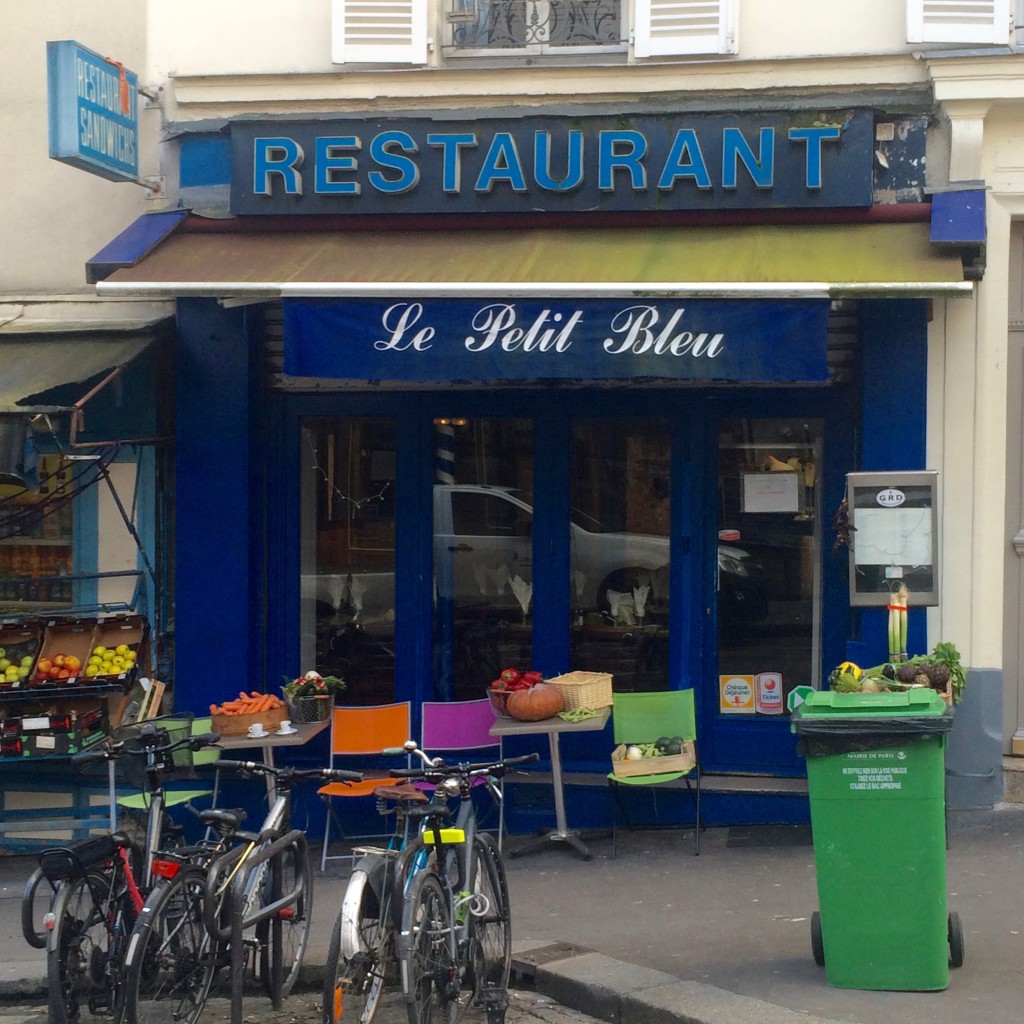 The service was hilariously grouchy. Well, one of the waiters is friendly and charming and the other (the owner?) is gruff and direct, as if he doesn’t really want your business, because with people clamouring to get in, and calling in their take-out orders, it’s not like he has to be nice. I think sometimes North Americans eating in Paris don’t appreciate that abrupt service is just part of the charm of dining out; take it as a little bit of local colour.
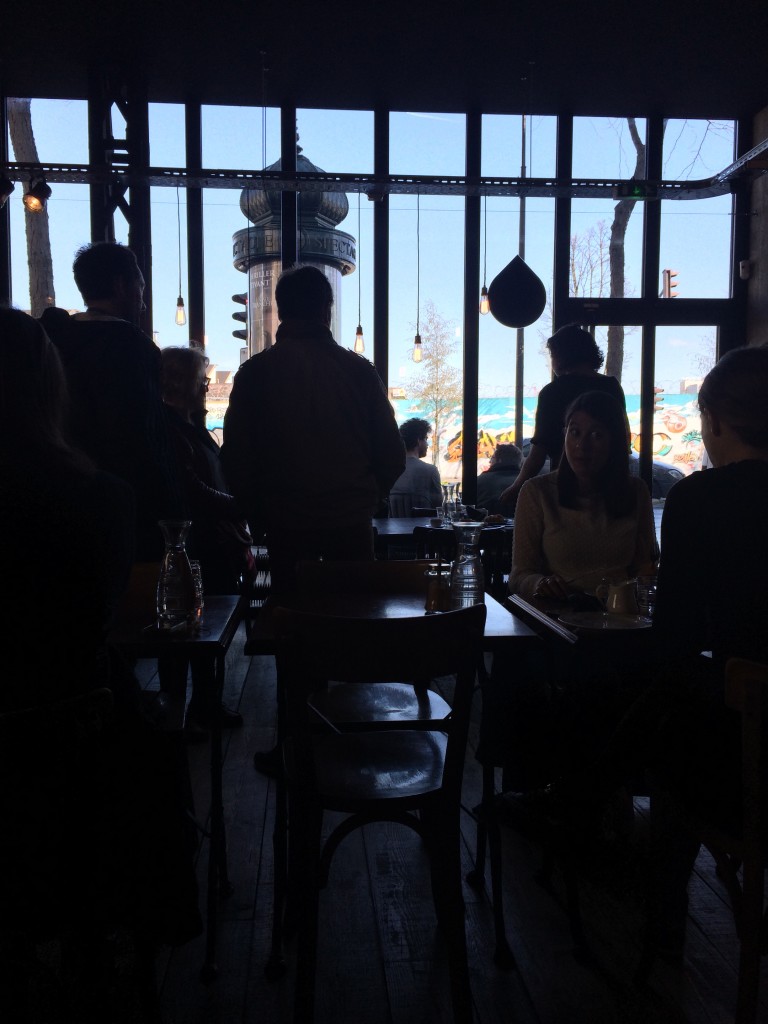 Hidden off in a quiet corner of the 18th is Café Lomi, which apparently opened as a café only after roasting coffee and supplying it to restaurants and specialty coffee houses in Paris.
 A little daytrip to Amiens, north of Paris, and we ascertain that the local specialty is La Ficelle Picarde. Wikipedia (should we trust Wikipedia?) says ‘its origins appear based in
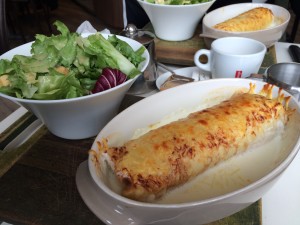
 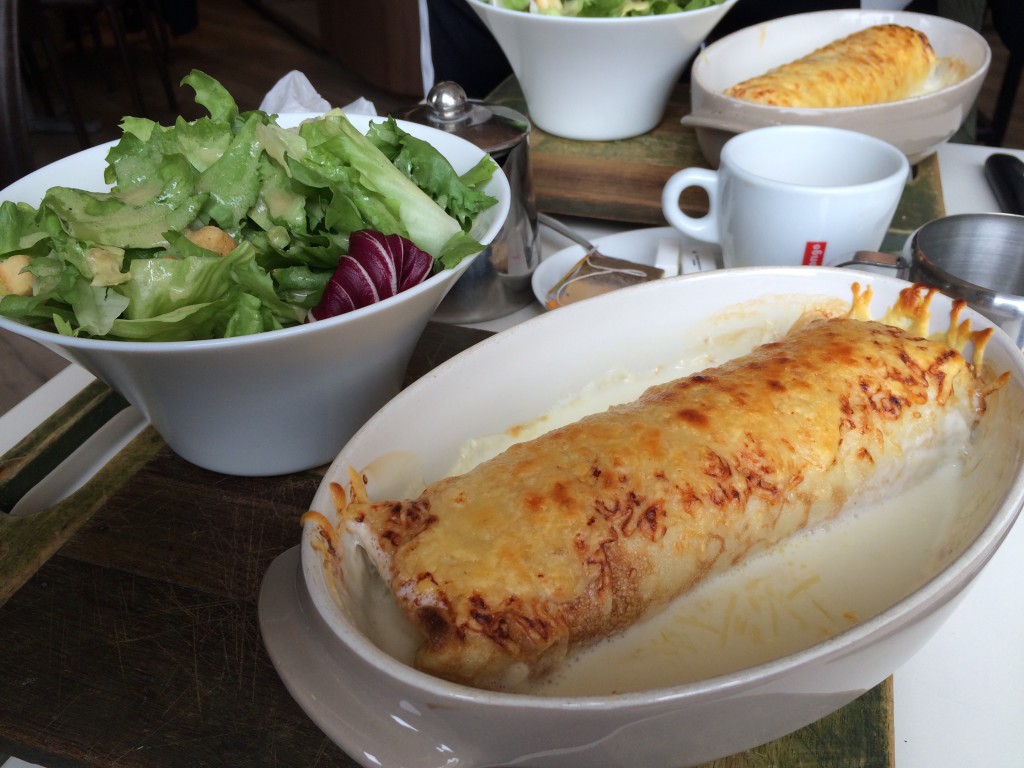 So, the local specialty is a crêpe, rolled up, with ham and mushrooms, a lovely bit of cheese melted crisply on top, and swimming in cream. What’s not to love?
 My latest advice for anyone visiting Paris is to combine art with pastries, two things that Paris excels at. After hanging out in Beaubourg for three weeks, I moved to a little chambre de bonne on the left bank and I really enjoyed the neighbourhood. Now being branded as the Carré Rive Gauche, there are dozens of tiny galleries with the most
  amazing antiques as well as contemporary art. I loved wandering in and practising my French with the gallery owners and staff. It’s a great thing to do, say, on a Saturday afternoon (if you’re having to work during the week) or basically any weekday afternoon.
 combination of cassis and chestnut was interesting as well as delicious.
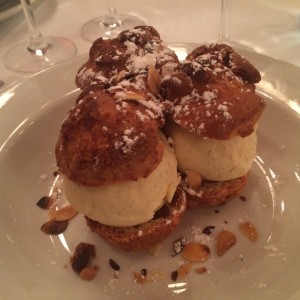
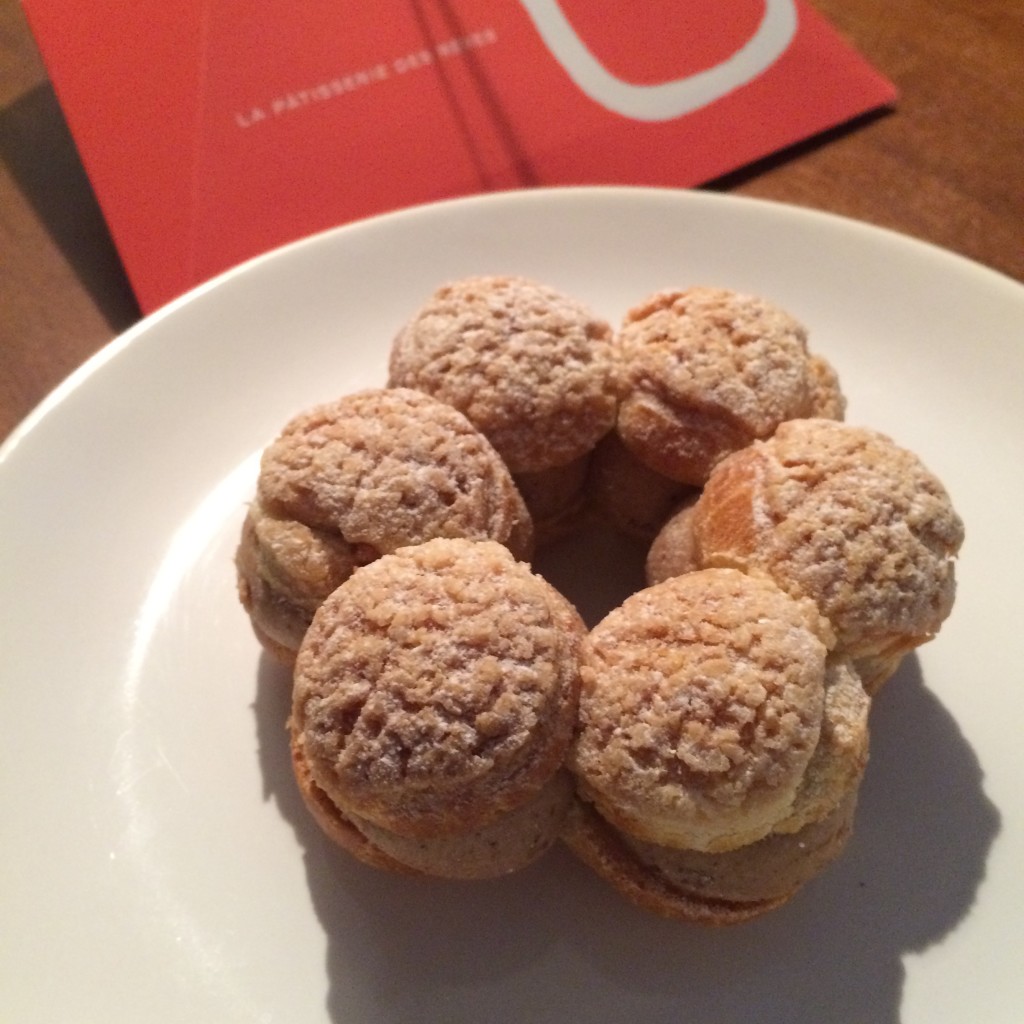
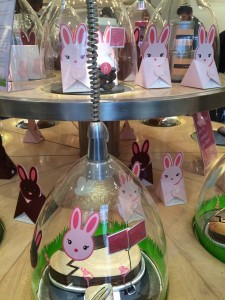 getting a treat! Online reviewers have various favourites but the woman I asked said their real signature was the Paris Brest.
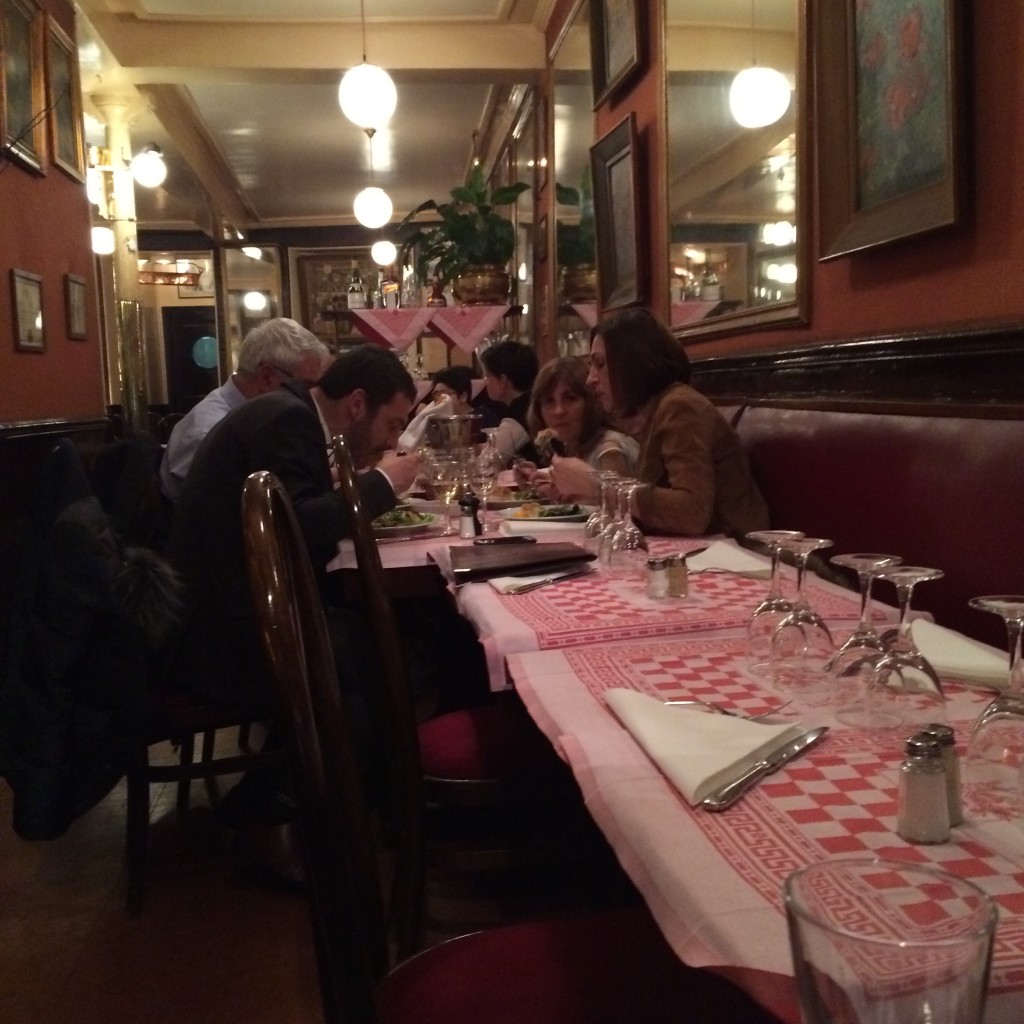
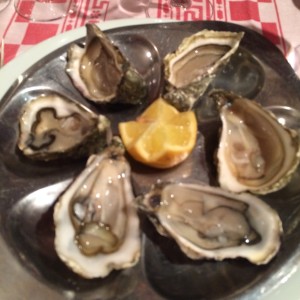 bit of history there. Chille, my old pal from Brussels, tells me that the French eat oysters even when they’re getting milky, but the Belgians think that’s disgusting. In any case, these were not milky… and they were beautiful. Very little salt taste; rather it was a very gentle and delicate flavour. Chille also warned me off the sharp vinaigrette that came in a small accompanying bowl, for how would you taste any oyster at all with such a strong flavour overpowering it? And what would be the point?
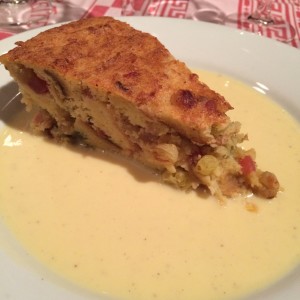 It had a pleasant homemade feel to it all.