The Christmas Booze Delivery Run

I’ve had a series of bad events for the apartment I rent out, so I felt that I wanted to show some appreciation for my property manager, who has had to do a LOT more work than usual, and send apologies to the tenants, who are new and have had to put up with works and repairs ever since they moved in.

As I was preparing the cards to go with the wine, I had a flashback to the Christmas Booze Delivery Run that I used to do with my Dad when I was a kid, maybe ten years old? I can never remember my exact age in memories from that time. I had Christmas holidays from school, and would hang out at my Dad’s office in Vancouver’s downtown and pretend to help out.

But this task was really fun. Dad would order in a dozen or so bottles of alcohol. Most were scotch, Crown Royal, a Canadian brand, though there were a few other brands too. Some bottles of rye. The unusual bottles were liqueurs: Kahlua, I’d guess, and maybe Tia Maria. He had shining metallic gift boxes to fit the bottles into, and then they were all neatly labeled with the recipient. Dad had a list in one of his many tiny notebooks, written in his nearly illegible handwriting (it runs in the family), of the person and their preference.

The infamous Crown Royal. Also my Dad’s favourite whiskey. So we had these purple bags around our house for years… everywhere.

We would then drive around on a day sometime before Christmas: the main destinations were the two banks in Chinatown that Dad did all of his business at, Canada Trust and the Royal Bank of Canada, although I believe gifts were also destined for his lawyer and accountant and a few others. But various bank managers and favourite tellers were the recipients of these gifts.

We probably parked in the alleyways of Vancouver in commercial loading zones. Dad always had many companies registered to him. He explained that they could be used for various reasons but also hinted that they were useful in amusing ways. Debt could be transferred from one company to another; bankruptcy could be declared as a way to avoid debt; various advantages could be accrued by using different companies for different purposes. One advantage was declaring one’s car a commercial vehicle, paying a fee for it, and being able to park in these special places, when no one else could, and it was hard to find parking anywhere in the downtown (and you had to pay for it!). It required a magnetic sign that he would affix to a steel plate and then put in the side window of the back of his station wagon when he needed to park (they were always station wagons).

I remember the warm feeling of knowing we would do something that was appreciated, and we were always greeted with such warmth and cheer. My  brother reminds me that because it was the Christmas season, there was excellent snacking along the way, as each person had something open to share with you, especially if you were Joe Quan’s son, or so it seemed.

I also liked that it was a tradition that Dad had created. And it was a lesson: for how to make the world work better. You created good relationships with the people that you needed to work with; you showed them appreciation for their work and the relationship they had with you. It could be seen as calculated, but there was real goodwill behind it. And why not be generous? Why not give gifts? Why not make the wheels turn a little more smoothly? I’m happy to have learned these lessons from my father. I didn’t even realise I was consciously doing it, until I was reminded by the wine boxes of this tradition. Perhaps, it’s one way that I’m keeping his memory alive.

Posted in Blogging, Creative Non-Fiction, Family | Leave a comment

Coffee in Sydney: Bowan Island Bakery, Zetland

Since I’m from Vancouver, Canada, which is not so far from Bowen Island, the name Bowan Island caused me to do a double-take. But internet research is offering no illumination. Aside from the name of a bakery that has become renowned for sourdough, is there actually an island named Bowan in Australia? We stopped here for coffee, trying out East Village for groceries (partly because it’s near Peter’s of Kensington where I wanted to pick up something). In fact, we found the Taste Growers Market very appealing indeed with their fresh fruit and vegetables and other high-quality groceries, but I suppose that’s a review for Yelp rather than Zomato, isn’t it?

In any case, Bowan Island Bakery seems to be THE place to get coffee (there were one or two other casual, tiny stands). This one is big and well-lit and was busy and is very, very appealing in terms of the visuals: pies, bread, pastries. All looking very yummy. But I’m trying the keto diet at the moment so opted just for coffee. And…

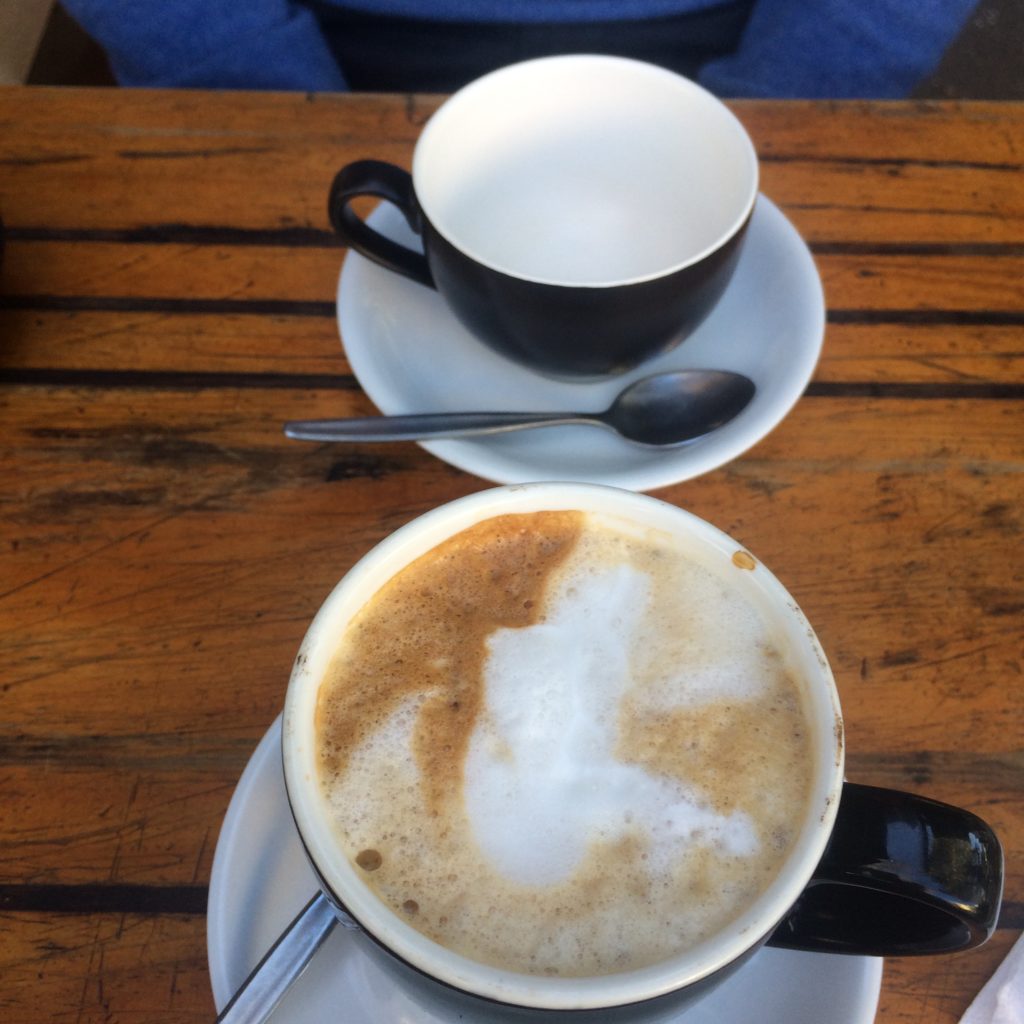
In Sydney, coffee art is so common, I gets the sadz when my latte looks like this. Oh well. It tasted fine.

Bowan Island bakery Menu, Reviews, Photos, Location and Info - Zomato

Posted in Brunch, Cafe, Food n' Grog, Sydney | 1 Comment

Sydney Food Diary: Saké Restaurant, The Rocks

Wow, was this a nice meal. Invited along for a business lunch, we had a whole selection of dishes: edamame with a spicy salt for dipping, gyoza, vegetarian sushi, and popcorn shrimp. A sashimi selection was beautifully presented and appropriately tasty and fresh. This dish above was my favourite, two types of sashimi cubes in a light mayonnaise on top of a deep-fried seaweed cracker. Delectable.

The table indulged in beer, wine, some very impressive desserts and even a dessert wine. I can’t fault the meal; appropriately special for a special occasion.

Saké Restaurant & Bar Menu, Reviews, Photos, Location and Info - Zomato

Posted in Asian, Food n' Grog, Sydney | Tagged | Leave a comment

Coffee in Sydney: Gardenia, CBD

Now, if I was hungry, and it was lunchtime, I would have loved to try this place. I loved the contrast. A sign that makes it look like the place has been around for a long, long time, yet a fairly newly refurbished interior, as it was a cosy and stylish space, bright and light and open to the street. The menu, and items behind the counter, though made it look like very much a family-run operation, serving casual Vietnamese food. I also found it quite sweet to observe regulars dropping by for their coffee.

But I was just looking for a place for coffee, on Kent Street where I had to drop off something to be FedExed at Mailboxes Etc. I was glad for a comfy place to prepare the papers, and sip a delicious large latte. Having just come back from a trip to Italy where I didn’t like their lattes and ended up drinking caffè machiatto instead, I found this a perfect combination of milk and strong espresso and as a bonus: latte art!

Gardenia Menu, Reviews, Photos, Location and Info - Zomato

Posted in Cafe, Food n' Grog, Sydney | Leave a comment

Sydney Food Diary: Pott’Spot, Potts Point

I confess: I passed up eating here previously because… of the sign. I couldn’t read it at first, and it looks more like Pott’Spat than Spot, which is an even more terrible name for a restaurant. The childish lettering, the bad rhyme. Agh. But please try to get by that, as I did. For once I did, as my friends R & F encouraged us, the food was not just surprisingly good, but really very good.

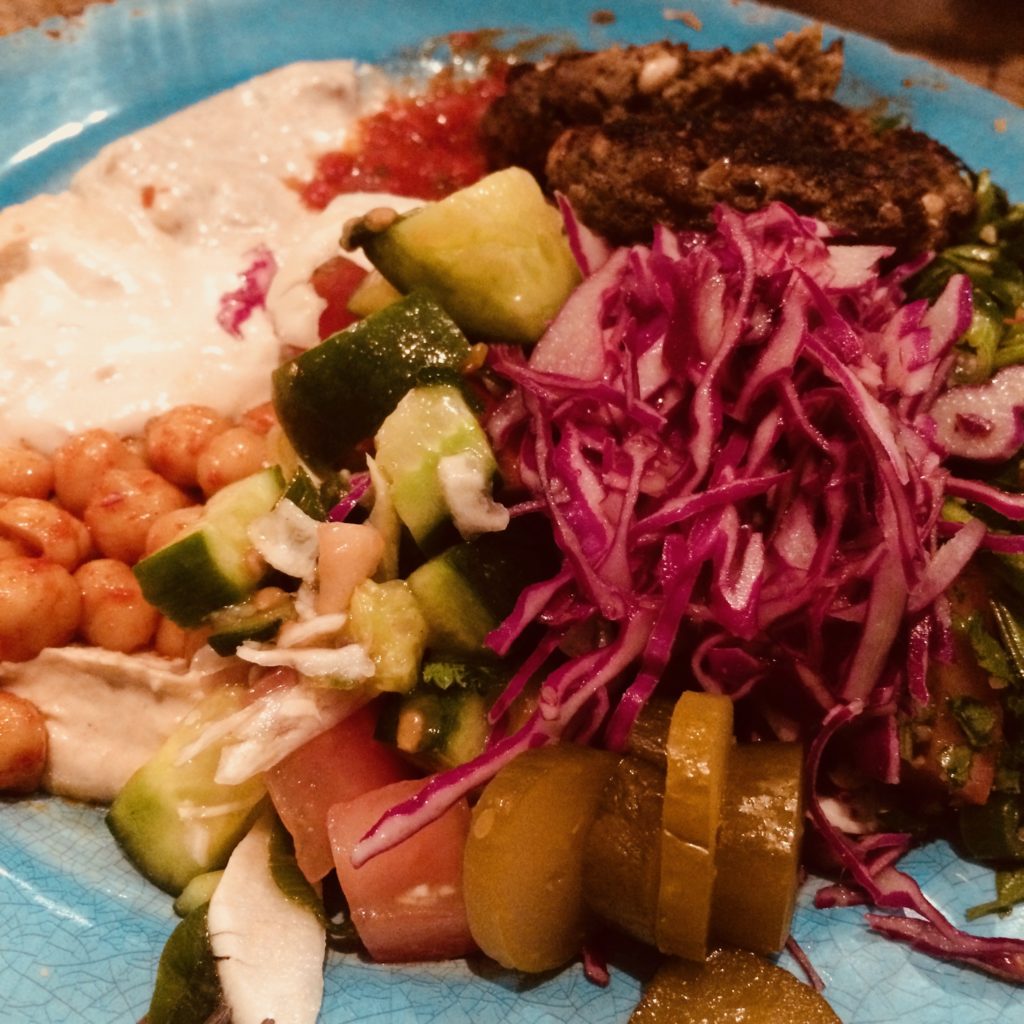
I had slow-cooked lamb with melted scamorza (a cheese) and a poached egg on a crispy brioche, and it was an elegant and delicious order, plated beautifully, and just the right size. Two of our party had a breakfast bowl with kale and quinoa and falafel and an egg and again, it was lovely to look at, and well-received. R & F think this is some of the best brunch in all of Potts Point, and who am I to argue with the locals. Really, a very good meal. Now, can we do something about that name and sign?

Pott'Spot Menu, Reviews, Photos, Location and Info - Zomato

Posted in Brunch, Food n' Grog, Sydney | Leave a comment

Andy and Stevie’s Sicily Travel Guide

Palermo

Funny. I hadn’t really heard all that much about Sicily but when we said we were going for a week there, I found it’s a regular destination for international tourists. And why did I think it’s a small place, being an island, and way at the bottom of Italy, when it is in fact an economic powerhouse for Italy, and well-populated?

I was worried that a week wouldn’t be enough, when I started to do my research, but in fact, we found it a good amount of time. I suppose our success was in not trying to do too much, but just enjoying what we saw.

Monreale. Bling.

What was wonderful for me was that Sicily was so varied. You can get the feel of some fairly big cities, metropolitan, and you can also get the sense of a rural, country village. With one week available to us, we started in Palermo, and drove around from there in a counterclockwise direction until we reached Messina, to grab the ferry to continue our journey in Puglia.

I think that people can really design their trip to Sicily according to how they like to travel. A more cosmopolitan adventure is available by spending time in Palermo, Catania and Siracusa. You could certainly find luxury resorts (Taormina, for example) and do a fine dining tour, or try to become an expert at the local markets and cook your own dinners! History and historical sites abound.

Siracusa

For us, we tried to do a few different things each day and settle into our accommodation. We caught some history but didn’t focus on it. We made sure we had one high-end meal (which was memorable and wonderful). We’re not beach people, and are not so crazy about crowds of tourist or wealth. We mostly drove around, listening to Italian pop music on the radio (RDS was our favourite), from place to place, enjoying ourselves. I can’t believe I managed to drag my husband to the Sicily Outlet Mall (not great and certainly no bargains, but fine for a change of pace, and wasn’t out of the way from our tour).

One of our agriturismo hotels.

Where to stay: We really loved the Italian Agriturismo system where you stay on properties attached to farms (hobby or commercial) and slightly out of the way (but close enough to cities and other attractions). With some research, you can find some real gems: historic farmhouses and other old buildings. Many have pools and are nicely renovated. And they’re inexpensive. We had one miss: a rundown farmhouse without wireless at the foot of Mount Etna. Do your research! In retrospect though, it’s good to switch things up, so as much as I loved the agriturismo venues, it’s fun to stay in the old part of a city or town in a hotel.

About to eat at Il Duomo

Where and what to eat: Sicily is big enough that there are Michelin-starred restaurants all over the island. So, why not treat yourself to one? We loved Il Duomo in Ragusa (and we loved Ragusa). In terms of local specialties, there are lots. We liked the salads with oranges as their base. Gelato and brioche (for breakfast) is popular in Southern Italy. Seafood is everywhere of course (fresh sardines!). Fried things seem popular and while I tried the fried chickpea fritters, once was enough. Of course, the arancini are famous and delicious and you should try all varieties of them, as well as many helpings of granita (loved the pomegranate flavour) and gelato. There are a multitude of pastries to try, and we only sampled a few. I found the famous cassata cake too sweet, though loved the cannoli.

Seafood everywhere

For drinking, aside from the ubiquitous Aperol Spritz (or Campari Spritz) as your evening aperitif, you could try a bitter (or amaro) to help your digestion after dinner. Local versions are available and I slowly downed a quite bitter Amaro from Etna while travelling. However, my favourite amaro was the Vecchio Amaro del Capo from Calabria. It tasted just right. I am open to being plied with other options to find a new favourite though.

I love the various versions of carbonated mineral water (frizzante) and take them over still, to accompany a meal, any time. And of course numerous coffees all morning should help get you through the day. My favourite was a caffè macchiato, an espresso with a small shot of milk. I love that these cost a euro or less, and you drink them at the counter with a little cup of water (although Italians love their environmentally unsound plastic cups for water). They’ll charge you more if you sit down. For wine, I barely nicked the surface of trying the local grapes: Nero d’Avola, Zibibbo, Inzolia, Grillo, Fiano and more.

Bitters

Finally:

¯\_(ツ)_/¯ We preferred Selinunte over Agrigento (less tourists and easier to get close to the ruins) in terms of Greek ruins.

Selinunte

¯\_(ツ)_/¯ Loved all the hilltop cities, especially Ragusa.

¯\_(ツ)_/¯ Often, you are NOT allowed to drive into historic areas without a permit, so watch out. Also, don’t overstay your parking. We had a funny experience where we managed to chase down a parking inspector and pay her less than a euro for the time we were over; if we’d had to pay the ticket, it would have been 20 or 30 euros.

¯\_(ツ)_/¯ Both of us found Taormina too full on with so many tourists, and so many shops. It’s a scene though, and good for people watching, and the ancient theatre made it worth it: so beautiful, and especially at night.

Taormina

¯\_(ツ)_/¯ I think I would have liked to spend longer in Siracusa. Loved the dark volcanic stones used in the buildings and streets.

¯\_(ツ)_/¯ Nothing much to shop for (which is good, since I shop too much anyways). Perhaps some souvenir olive oil, pasta or another food item (if your customs allows you to take them home), and a well-chosen piece of ceramics?

¯\_(ツ)_/¯ Apparently, one of the best bakeries in Italy is in Erice… I didn’t read this advice until after we’d passed through!

¯\_(ツ)_/¯ And watch out for the prickly pear cactuses, nicknamed ‘Il Bastardone’, the ‘Big Bastards’. There are fields of them, so it’s evidently a crop of some sort (we only had a bit of sweet sauce at Duomo), but you’ll see them everywhere!

The big bastards

Questions? Your own travel tips? Leave them below in the comments!

Posted in Food n' Grog, Travel | Tagged , , , , , , , , , , , , , | Leave a comment

Book Review: Klaus Ove Knausgård’s My Struggle

My Struggle (#1, #2, #3)My Struggle by Karl Ove Knausgård
My rating: 5 of 5 stars

A deeply personal reflection on the death of Knausgaard’s father, My Struggle is universal in its exploration of how we observe the world, how we interact with it, memory, grief and loss.

I’ve always been interested in reading literary bestsellers or award-winners to find out what other readers find of value and are attracted to. So, I’ve been long interested in reading this ‘literary phenomenon’ to find out what the fuss is about. I seem to recall a focus on Knausgaard’s detailed descriptions of his actions and thoughts in his writing, and I also read a profile of him (where was that? The NYT? The New Yorker?) that described him as so self-conscious, so awkward and introverted that he was ill-equipped for the attention that comes from being a best-selling author.

It’s by chance that before reading this book, I completed Elena Ferrante’s Neapolitan novels, four books that tell the lives of two women from being girls to older women. Ferrante’s descriptions of the relationship between the women and their social and community context may have a different tone and culture, but there’s some similarity in the detailed, precise analysis of emotional states and observation, as well as how who we are as children or adolescents relate to our older selves. And because there are four more Knausgaard books, they seem to have a similar scope. And I also had to put some thought into why I enjoyed the books and wanted (want) to read all of them.

Having lost my father eight years ago, there was much that touched me about Knausgaard’s exploration of his relationship with his father, the aftermath of death, and his complicated grief. I also relate to, but not completely, with what seems to be his basic emotional state. Writers about the Enneagram, a model of human psyche, describe humans falling into the same fixations, the ways we react to the world, and the three negative emotional states of fear, anger and shame. Knausgaard is clearly all about shame, and the descriptions of key incidents of his childhood or his relationship with his father and brother or the start of his writing career: they’re excruciating but also telling. He writes about the aftermath of a failed interview with a famous author: for Knausgaard, it is one of the worst things to ever happen; for his brother, the co-interviewer, it was simply unfortunate.

And I guess that’s why I found the book interesting and engaging, the detailed and sometimes mundane descriptions of his surroundings and life (his reported dialogue is stark, recording simple statements of agreement or disagreement) that suddenly go into a wormhole of memory or philosophy with challenging outcomes.

I kept thinking of Jonathan Franzen. The NYT’s recent profile of Jonathan Franzen describes how, when freed from ‘the impetus to educate’ because he ‘realized that the arguments and social criticism he wanted to assert… could live and breathe on their own. He didn’t have to Trojan-horse them into his novels’ characters or plot points anymore’, he went from a novelist with mediocre reviews to a literary superstar.

There’s something similar at work here too, the combination of detail (to some, mundane) and powerful intellect. They’re both introverted and awkward people, clear about their faults (I found this more expressed in Franzen’s book of autobiographical essays), but have the ability to tackle big questions in a literary form with an intensely personal voice full of detail and minutiae that has commanded the world’s attention. There seems to be a bit of fascination with each of them, and perhaps some jealousy, that flawed people can produce such well-regarded literature.

I wonder how I’ll feel about his writing after I’ve finished the next book. Stay tuned for another review…

View all my reviews

Posted in Book, Review | Tagged | Leave a comment

Book Review: Andrew Sean Greer’s Less, Fiction

LessLess by Andrew Sean Greer
My rating: 5 of 5 stars

I loved Arthur Less, the protagonist of the novel Less. I’ve occasionally fallen in love with the voice of an author or one of their characters but then realised that I liked reading about them, but wouldn’t necessarily want to spend time with them. So I’m not sure I’d like to hang out with Arthur, necessarily, but it was very fun to follow him around the world in this book.

Plus I have much more in common with him than I’d knew before I started reading. He’s 49 years old at the start of the book, and I’ll reach 49 in less than a month. We both have mispronounced Pulitzer for our entire lives. We both have grandiose plans, abandoned, every vacation to somehow fit some form of exercise into our trip.

These similarities and more made it the kind of book that I wanted to share anecdotes about with friends, mention phrases and situations that made me chuckle heartily. I loved how carefully it was plotted, and was surprised by the big reveal at the book’s end. And it’s lovely, unabashedly romantic conclusion.

The writing was engaging and skilful, drawing one in with a light tone or cajoling, and then surprising with amusing but not forced metaphors and then suddenly (when appropriate) beautifully poetic and emotional sentences.

I loved how casually gay Arthur and the book are, and that the book wasn’t consigned to the category of ‘gay fiction’ and has instead won the Pulitzer Prize this year (and I loved the meta-fiction that there is a discussion about winning the Pulitzer Prize in the book, which the author I’m sure couldn’t have predicted).

Perhaps most of all, reading it on a flight to Canada to spend some time caring for my mother, who fell and had a serious brain injury, I was so grateful that it made me laugh with such enjoyment in the midst of a difficult time. Thanks Arthur Less, and to his creator, Andrew Sean Greer, for this bit of light.

View all my reviews

Posted in Book, Gay Life, Review | Leave a comment

Sicily Food Diary: Duomo by Cicco Sultano, Ragusa

Il Duomo was everything I’d hoped for and more: an exquisite fine dining experience, rooted in Sicilian culture, food and ingredients that would be unrepeatable elsewhere. An elegant atmosphere, a chance to try a range of interesting Sicilian wines, and treated like kings by the wonderful staff: it was all very happy-making.

Ciccio Sultano is apparently one of Italy’s most famous chefs, and Il Duomo has a reputation as one of its finest restaurants with a two-star Michelin rating. It’s located just down the hill, behind the magnificent church at the highest point of this old part of Ragusa, a gorgeous place to visit. For some restaurants, the setting really does make a difference, and this added some extra magic.

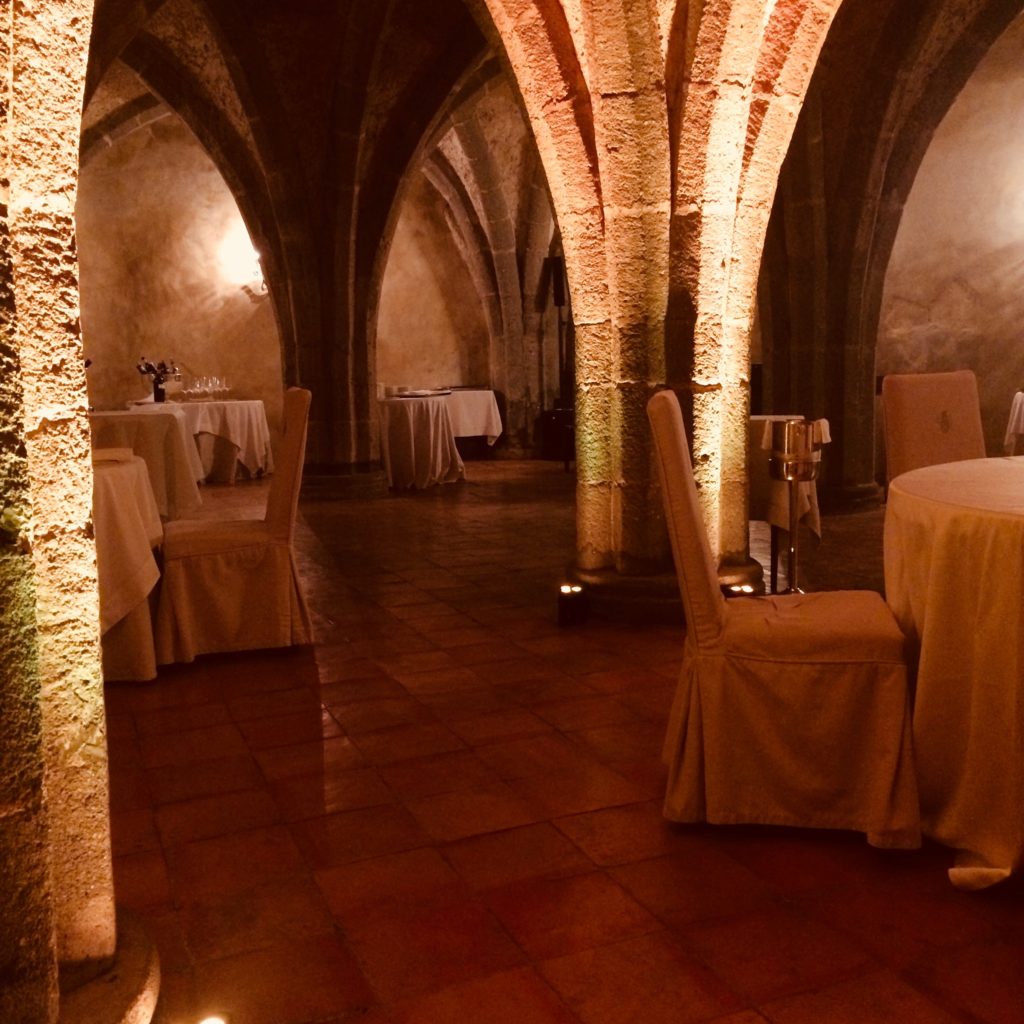
We arrived when they opened, at 7:30pm. The décor is classy and quiet; there are only a few tables in each room, and multiple rooms. We sat as a table of two with another table of two across from us (but not too near). There was a window with a partial, leafy view outside, and some nice artwork. The waiters had fabulous silk ties and matching pocket squares.

There was a choice of a five-course and an eight-course option, with or without matching wines (though one could also choose a la carte). We chose the eight courses (since when are we going to back in Sicily?) and as I’m the lush in the family, I got the matching wines. Though we started with a cocktail each (at 11 euros, cheaper than most cocktails in Sydney, Australia). They were sweet but with a very complex combination of flavours. Yum.

Our menu was focused on seafood, and as explained with local flavours and flourish. There were some pretty fantastic techniques used, but mainly as an element of surprise. The food wasn’t too tricky. Appetizers were awfully fun. A spoonful of raw tuna with a thin layer of watermelon over it and bottarga. From an olive, they’d somehow extracted the pit, and stuffed it with something that had the crunch of a pit but was edible.

The artfully displayed tower of other appetizers, three each, was fun. A tiny delicate rice ball, a pastry with cream and blue roe on top of a raw shrimp, something that looked like an olive on top of a rice cracker.

I’ve never had oysters matched with pistachio cream (delectable).

And tiny pieces of a fine dining version of the local pizza… A thick, moist Sicilian pizza called Sfincione.

And on the side, a spoonful of sea urchin with cream (I can’t remember exactly what it was).

Of course, there would be pasta served in Italy. This was handmade angel hair pasta, with clams and an intense saffron cream. Yum.

The next dish was a delight. A sort of pumpkin ‘cake’, with sardines layered into it, a bit of bottarga and cubes of basil. A fun mix of textures and flavours.

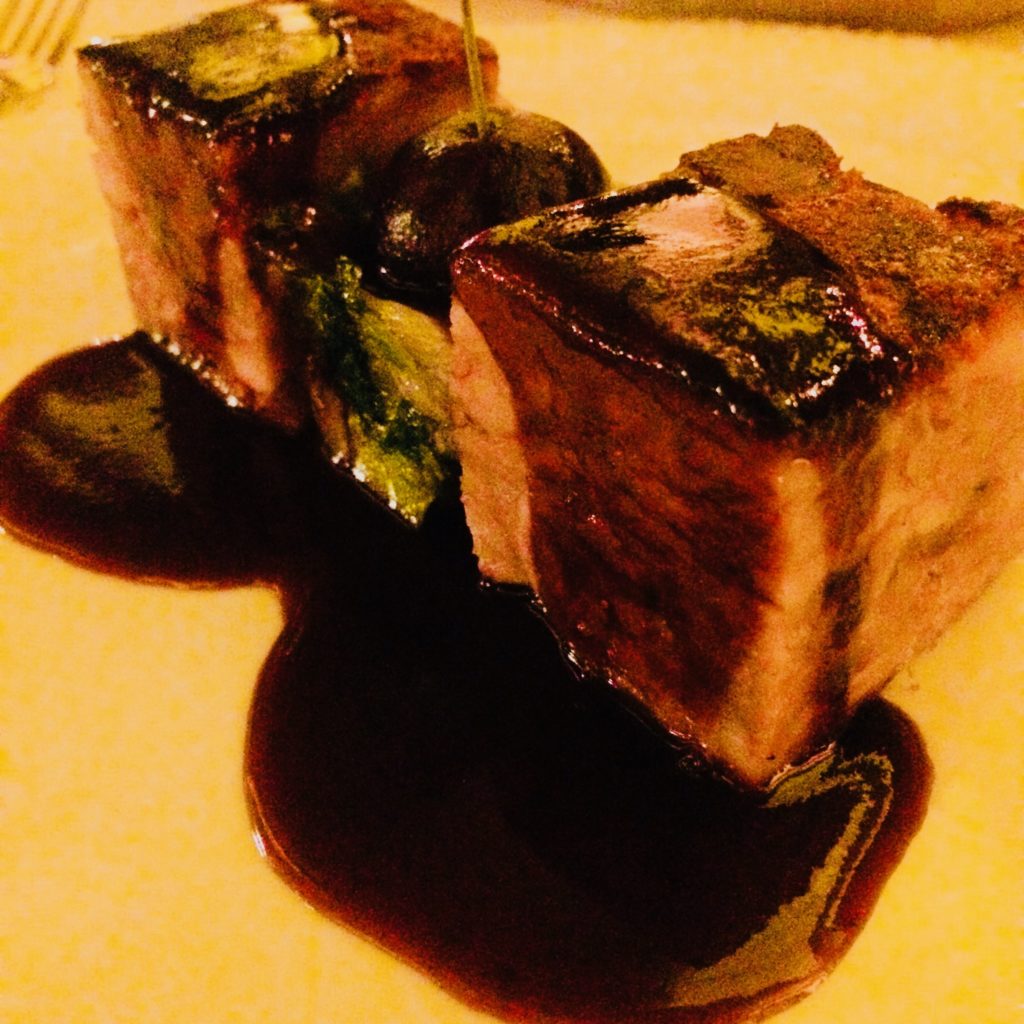
The tiny fillets were red mullet, I believe, served with a complicated molecular sauce, so wonderful and buttery and rich; I think it was perhaps a lobster butter, with that yellow round sitting in the middle of a clear circle. Sort of like an egg yolk surrounded by its white. Plus a piece of perfectly charred and crispy green onion, and a crisp sage leaf.

But my favourite was this tiny individual lasagna ‘Lasagna of the Queen’, with pillowy delicate pasta wrapped around ricotta and on top three pieces of the most intensely flavourful treasures of the sea: blue lobster, calamari and shrimp. And sitting in a bed of Sicilian bisque.

The tuna was an intense, steak-y piece of tuna, full of flavour and texture, and served in a really rich sauce (‘a sauce of itself’ the menu said) along with a caper sauce and a little onion that looked like it was whole, but then you slid the top layer off and it was filled with an onion confit.

As a palate-cleanser (how I love the idea of a small course in the middle of the meal to allow you to take a break…), a mouthful of truffle gelato. Seriously.

The catch of the day, grouper, was brought over in a pan, and then dished out by the waiter into each plate with vegetables on the side.

I loved, coming to the conclusion of the savoury dishes that the chef had decided to focus on seafood completely and not bother with red meat, which also meant I got to try a really interesting variety of white Sicilian (and one Slovenian) wine. I’ve had great seafood, in many places, so what made the dishes different were what was on the side, as the fish was cooked perfectly and simply and allowed to shine that way.

Dessert were numerous treats. A refreshing piece of pink grapefruit atop some creamy orange mounds and a gelato of yoghurt, I believe.

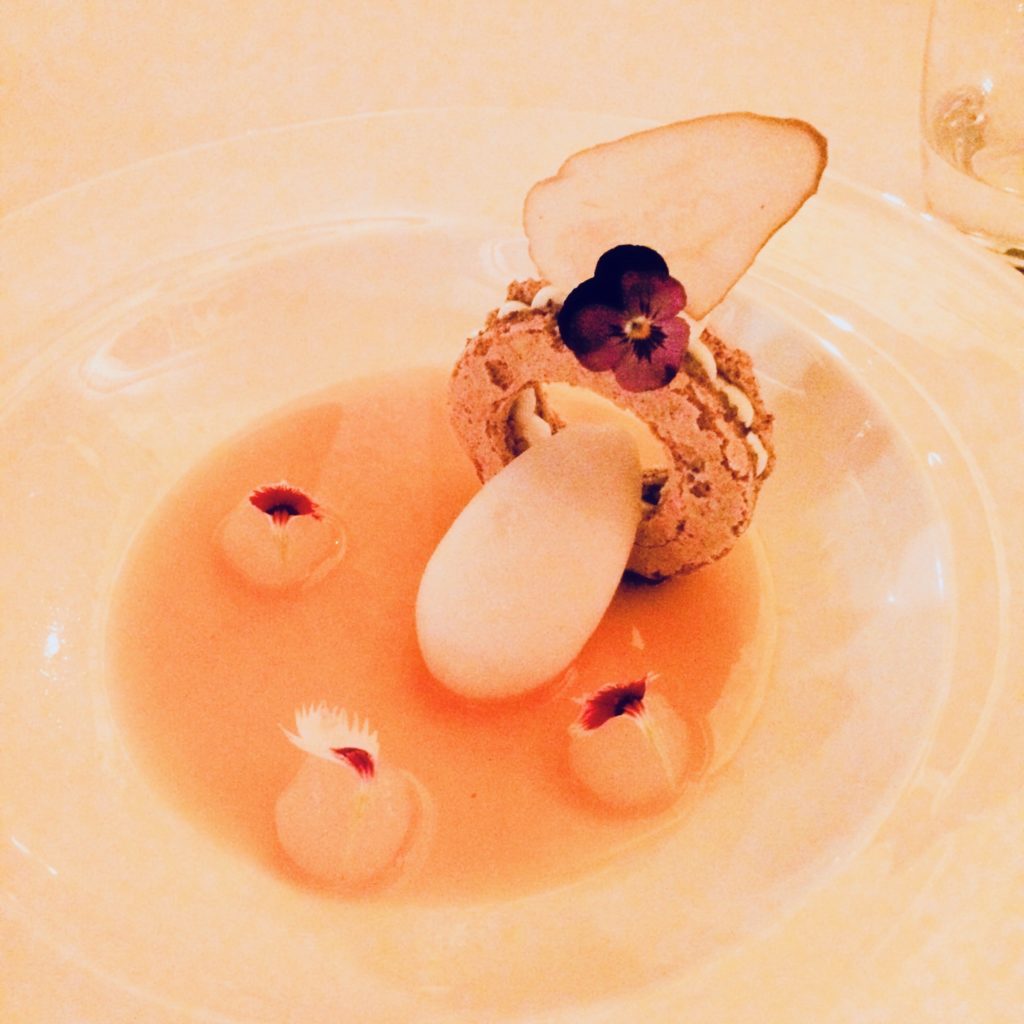
This was the best cannoli I have ever had and no doubt will ever have. Every component just tasted somehow better and more fine dining than anything I’ve tasted before. On the menu, it’s described as ‘Ragusa’s cow’s milk ricotta cannoli with warm San Cono prickly pear soup and Pizzuta almond sorbet. I was really intrigued by all the prickly pears we saw in Sicily, so I’m glad we got to try some!

We then had fresh cherries, tiny ice cream cones dipped in chocolate, a jelly and some chocolate… and thought that was the last dessert.

And then comes a gorgeous piece of pannetone, which apparently they sell as well, not just for Christmas but year round. As a side note, in Canada, growing up, my family would receive these cakes at Christmas from friends or acquaintances, and I never understood their appeal, as they were pretty dry. I think that not only had they taken rather a long time to get to Canada, but they weren’t the high-quality ones. When our friend Sina in Sydney gave us a first proper pannetone, it was a revelation: soft, pillowy, delicately sweet. Having a special piece of this cake at Il Duomo was fun.

I loved that there were so many traditional Sicilian desserts, humble desserts, amped up to fine dining. The wines, by the way, were delicious. I’m not such an expert, so won’t try to describe them except that I appreciated how they matched up with the food, and how they changed flavour with the food! Among the wines were:

  • 2016 Astraio, Vioginer, Maremma Toscana DOC, Rocca di Montemassi
  • 2012 Anas Cëtta’, Langhe, Nascetta di Novello DOC, which tasted to me, of honey and mead.
  • 2016 Kolbenhof, Vigna-Gewurtraminer, J.Hofstätter, which seemed to me to have a lemony, open flavour.
  • 2016 Blazic Rebula (Slovenia), which was lovely and dry.
  • 2016 Tenuta Capofaro, Salina, Tasca, Conti D’Almerita

As a final note, I’m always surprised on the food review sites that amidst the rave reviews of top restaurants, it seems like some people, because of the good reviews and reputation of a restaurant, are ready to give the opposite reaction, just to beat it down, as if a restaurant could never live up to a reputation lifted by so much praise. Then again, my husband and I see a lot of musicals and I’ve found that for the opening nights, or expensive shows, that people seem to give a standing ovation regardless of the quality (which is usually pretty good… but a standing ovation?) It’s almost as if because they’ve paid a lot of money, they’re determined to enjoy themselves and that what they paid for is worth it (husband thinks it’s about peer pressure and cultural norms though). If I think about it, I’m like this for fine restaurants. If I’ve chosen a restaurant based on its reputation and reviews, and if it’s going to be really expensive, I’m going to expect it to be really good AND I’m going to be rooting for it to do as well as it can.

So, on that note, Il Duomo, I give you a standing ovation. The smile on our faces was from a meal and evening that I will not forget.

Posted in European, Food n' Grog, Travel | Tagged , , | 3 Comments

Food blogging in Rome

I was lucky enough to spend about four days in Rome before my holidays in Sicily and Southern Italy. Good meals are always on my travel agenda, and writing about those meals serves a few purposes for me: it allows me an additional souvenir of the experience and recording that experience pushes me into considering the experience more deeply and fully.

So, I enjoyed eating in Rome, and blogging about it and putting up reviews. As I’m based in Australia, my preferred review site is Zomato. It bought out another Australian review site that I enjoyed using, eatability, but mostly they’ve suckered me in by gamifying my reviews so that I can be ranked as a top reviewer in a city. TripAdvisor has systems for giving various points and rankings but it just doesn’t excite me to ‘reach level 32 for hotel reviews’.

When I first got onto Zomato, I found pretty much right away that by regularly blogging my meals in Sydney that I could appear in the top ten of Sydney food bloggers (I’m currently number two). There are so many instagrammers in Sydney though, and reviewers (who put short reviews directly on Zomato, rather than writing a blog and linking to Zomato) that I am not on any top list of reviewers, and think I’m around #40 as a food photographer.

In Rome, however, Zomato is not very popular. In Italy, they’re only available in Rome, so it seems like an experiment as a business decision. The bad thing is there are not so many reviews up. The good thing, for me, is that after four days of blogs and reviews, I’m the number one blogger in Rome, the #15 reviewer and the #13 photographer. This won’t last that long I suspect (and after six months, the “points” expire) but for now, it amuses me.

What is clearly most popular is TripAdvisor. It is pretty great to have such a huge number of reviews for each of the restaurants and hotels, as I do think that data doesn’t lie. Even if there are unfair reviews in one direction, the same amount of unfair reviews in the other direction should balance it out.

My ranking on Zomato for blogging… on 31 July 2018

I do have a problem of the phenomenon that if a restaurant receives too many good reviews, other reviewers may just try to knock it down, or be extra grouchy because of the good reviews. And I also think in popular tourist destinations like Paris and Rome that you’ll see that the restaurants that are most visited are in the most touristy destinations, and some manage to garner great reviews because of their ability to be hospitable over the quality of their food (for me, the most important factor is food).

My ranking on Zomato for reviews… on 31 July 2018

I recently read that every one star loss or gain on Yelp leads to a 5 to 9% decrease or increase in review… Is that a good thing or a bad thing? If you believe that the wisdom of the crowds correctly assesses a business, and rewards good businesses with good reviews, it would be a good thing.

I do worry if ratings end up being unfair though, and I know how hard restauranteurs and their staff work, and what a tough business it is for the owners. I’m not entirely comfortable with the idea that restaurants these days get better ratings because either their food is instagrammable or they have a good marketer who knows how to attract reviewers, bloggers and instagrammers to their restaurants.

My ranking on Zomato for photos… on 31 July 2018

But on the other hand, because I believe I am a fair reviewer, I feel good about contributing, with honesty, to the wisdom of the crowds, and it’s like a nice tip to the restaurant, if they’re good, and I can give them a good review.

Posted in Blogging, European, Food n' Grog | Tagged , , | Leave a comment