
 How to Be Both by Ali Smith
My rating: 5 of 5 stars
I’m bowled over by this book.
I had no expectations and hadn’t heard anything about it. Neither did the cover photo of the singers Sylvie Vartan and Françoise Hardy give me an idea of what I’d encounter. The initial theme, of grief and losing a family member, is well-worn in literature, TV and movies; and a teenage girl is not who I’d naturally connect with as the narrator.
But I found myself not only immediately drawn into the story but delighted and confused: the narrative voice seemed so real, intriguing and charismatic that my reading slowed down. It was as if I couldn’t read faster than the action itself, my brain was taking extra time to absorb and try to make sense of what was happening. I was observing an interesting mind at work, in an unfamiliar culture (how young people think and interact with the world) in a situation unfamiliar to me (losing a parent at a young age).
Then suddenly, the narrative stops. A new one begins, not a teenage girl, now, but an artist of the Renaissance in the 1460s whose voice literally swirls through the page in a different shape and with different styling : and the artist, Francesco del Cossa, is hovering, observing the girl, George, who is observing the artist’s paintings. It would be disorienting if it didn’t feel already somewhat the way that I, as a reader, was observing George, hovering and intrigued. Francesco’s story is then told, interspersed with the way the artist is checking in with the girl, and I still smile to myself, the idea that the iPad is interpreted as a votive table, perhaps combined with the first Camera Oscura.
Perhaps to traverse so much time between the reader and character, the writing is showier than before; while we might not know how to imagine Italy in the 1460s, the images and descriptions are both clear and elegant. They transported me there. What I loved most were the descriptions of art. Often, I have not liked writers writing about artwork, and have a number of poems on my shelf by authors I otherwise love, where I feel that I’d much rather witness visual art than have it described to me. But art is described here in a general and specific way in language that excited me. A picture, Francesco explains, ‘does 2 opposing things at once … it lets the world be seen and understood… it unchains the eyes and the lives of those who see it and gives them a moment of freedom, from its world and from their world both.’ And then when explaining the intersection of ‘art and love … a matter of mouths open in cinnabar, of blackness and redness turned to velvet by assiduous grinding…’ It continues in a way that in a way that seems intellectually and emotionally astute, but makes me swoon with the beauty of its description.
In the meantime, there’s an interesting offering of themes that readers can connect with or not. While an examination of gender and gender identity is probably the strongest theme, it’s treated in such an interesting way, and there are so many more sub-themes and turns and twists. I was amused that what I connected with most viscerally was something the artist goes through: a period of time I’d rather forget with managers with the ugliest of characters and souls and me trying to be valued and paid for my work. Suddenly, here it was presented on the page in an unexpected form.
The biggest surprise was after finishing the book and finding out that half were printed with the story of the artist at the start followed by the story of the young woman; and the other vice versa. I wonder if I can be patient and forget enough of the story and get my hands on one of those other versions… How crazy and bold! I could have had such a different experience, just by chance and at this moment, I can’t figure out how I would have interpreted the book with the parts reversed. That blows my mind.





 Belanchan is a chili shrimp paste found as an ingredient in both Indonesian and Malaysian food. I’m not so familiar with it from my Cantonese background, but find it earthy and complex, with a hit of spice. So, to see it as the feature ingredient of the Char Kway Teow, the fried rice noodles dish that I love (and I find the Malaysian and Indonesian versions of this more flavourful and interesting than the Cantonese version I had as a kid), this was a no brainer of a choice.
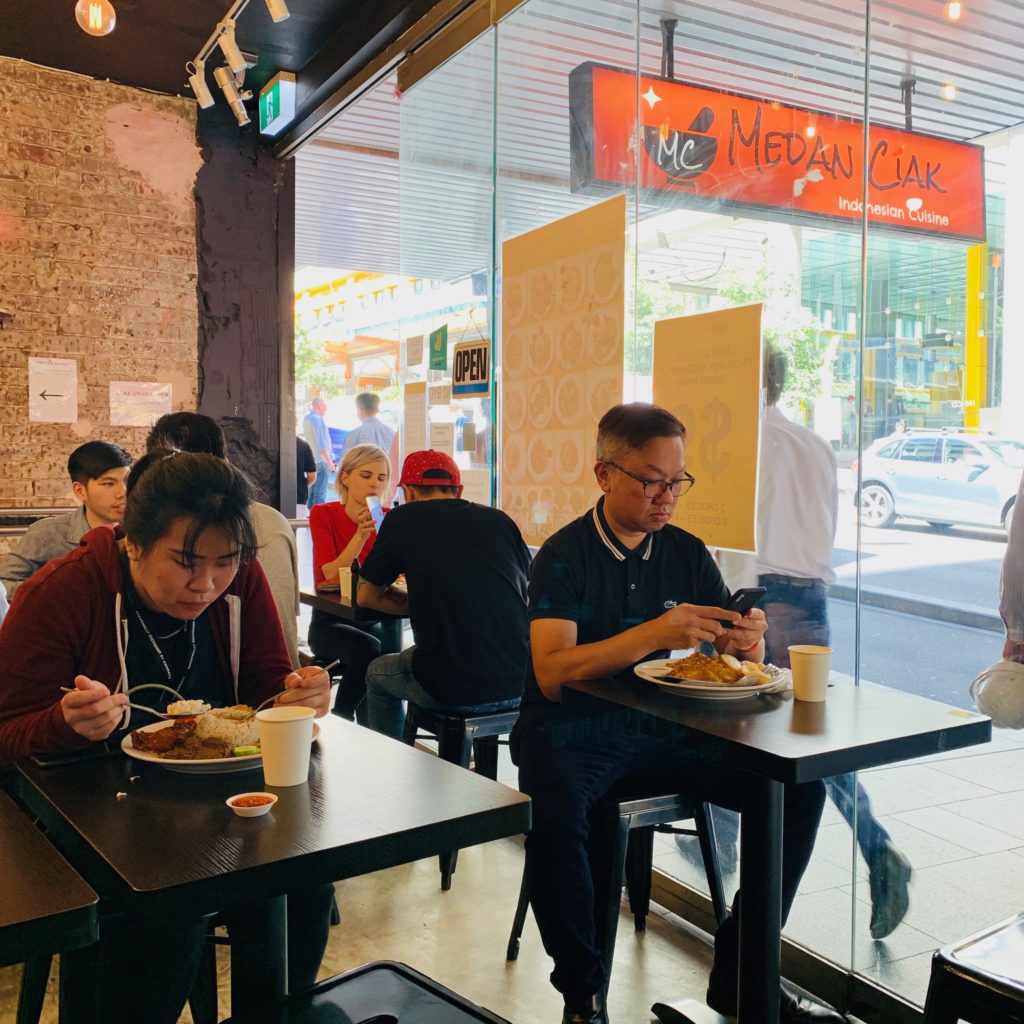 Surprising that after only discovering the Medan Ciak on Elizabeth Street in Surry Hills recently, I came upon their CBD branch (which I’d seen but not taken note of). It’s just around the corner from GetUp! where I’m doing some volunteering in the lead-up to the national election. So, I’ll have the opportunity to make it a regular lunch spot!
 A friend introduced me to the Botany View Hotel for a meal a few weeks back, and I found the experience so fun, we thought we’d do another pub dinner in Enmore (the bottom end of King Street, Newtown).
 The Union Hotel has been around for yonks, though I think they change the menu and chefs every few years. On a Wednesday night, it was nicely buzzing; it’s what I liked about the feel of the other pub. Friends and couples and families out for a treat, a nice meal in a relaxed and casual atmosphere.
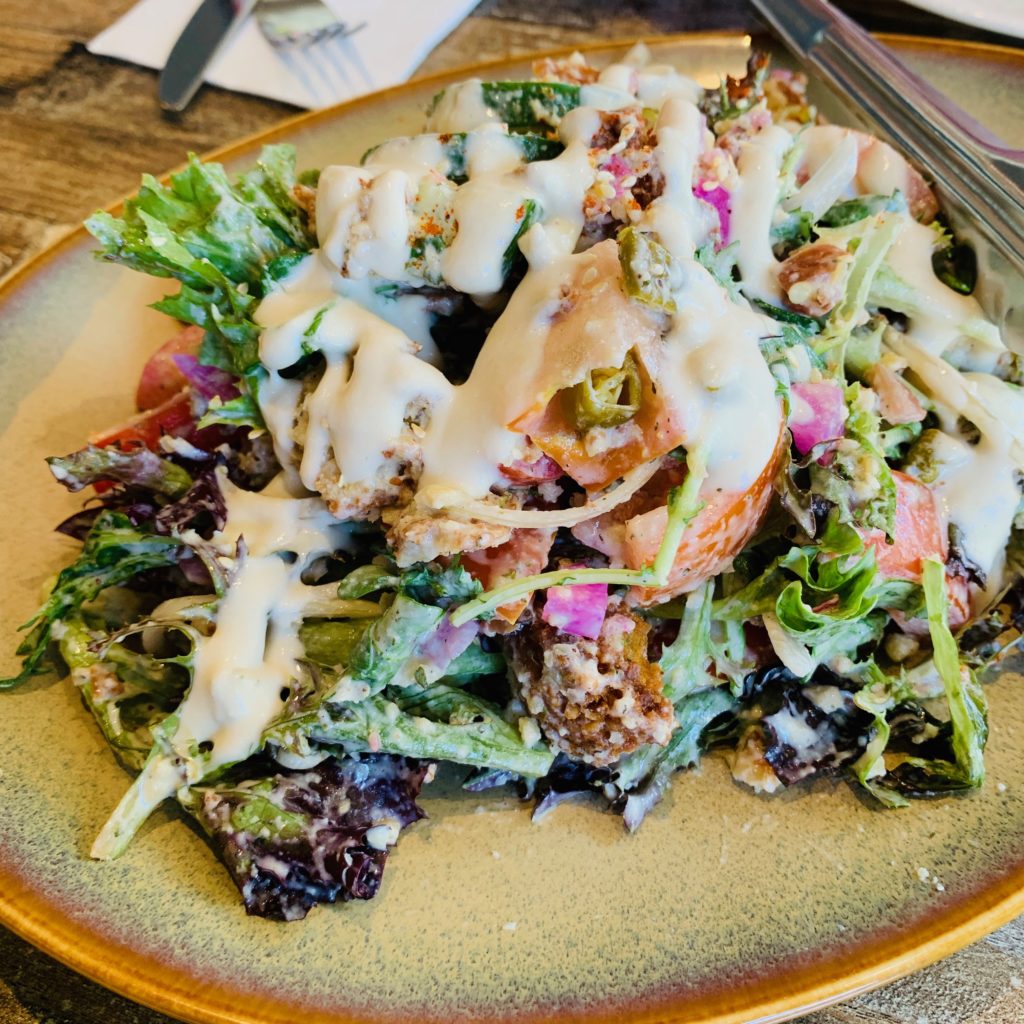
 The food was good. I’ve been kind of interested in the concept of a ‘chopped salad’ and how I don’t think I had really understood it, and I don’t think it’s a ‘thing’ in Australia, but in the USA, it seems to be a long-established food trend, where you simply chop a salad into small pieces and coat it with the right amount of dressing.
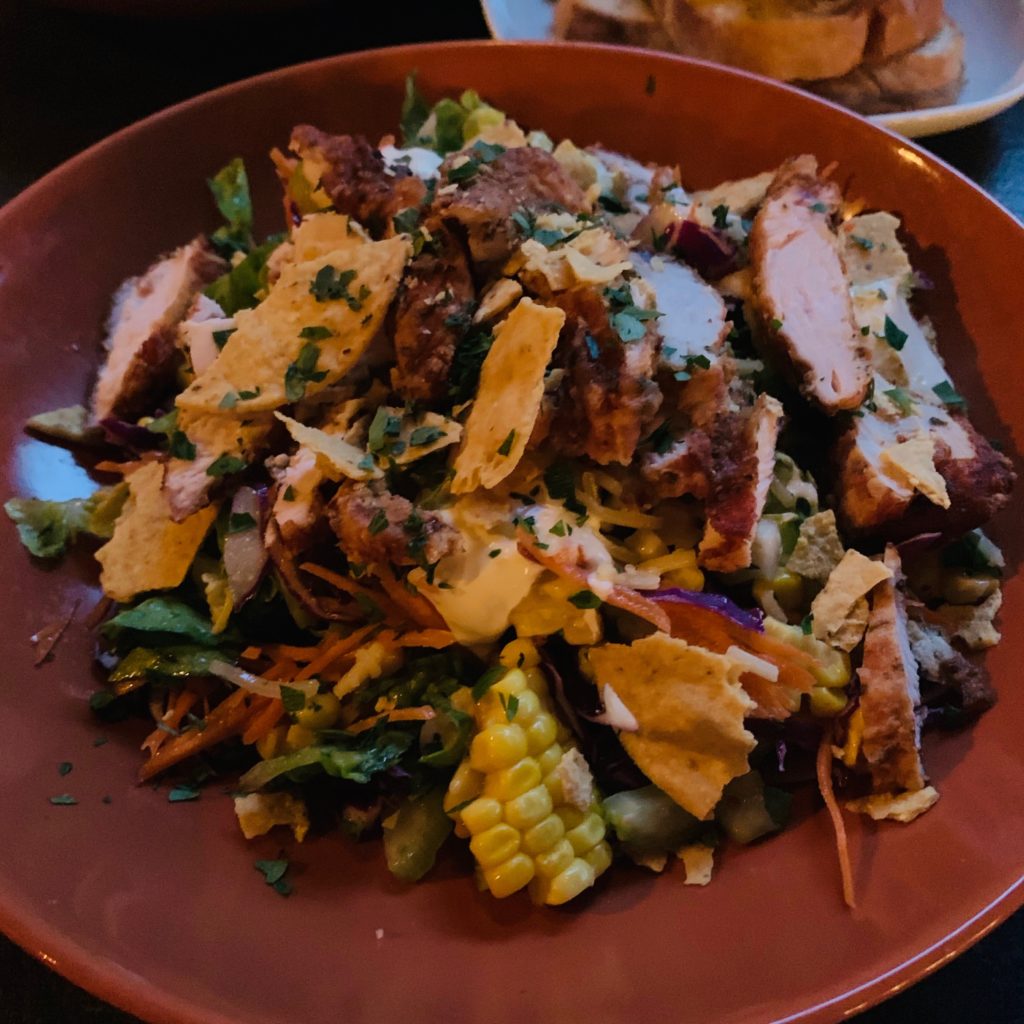 Sometimes called a Cobb Salad, it’s said to date back to the 40s, but seems to have had a resurgence in recent years. It’s all about getting a perfectly well-distributed biteful of a good mixture of taste and crunch. More complicated than it might seem, but I could definitely see the appeal, in the Southern Fried Chicken chopped salad that I had, which was basically a delicious mixture and combo (in fact, if you’re at all interested, this
  My pal had a haloumi salad and also enjoyed it; we also had a side of slightly sad garlic bread, and inexpensive house wine and lemon, lime and bitters. All in all, a fun night out, and I have to say that I liked the kooky decor too.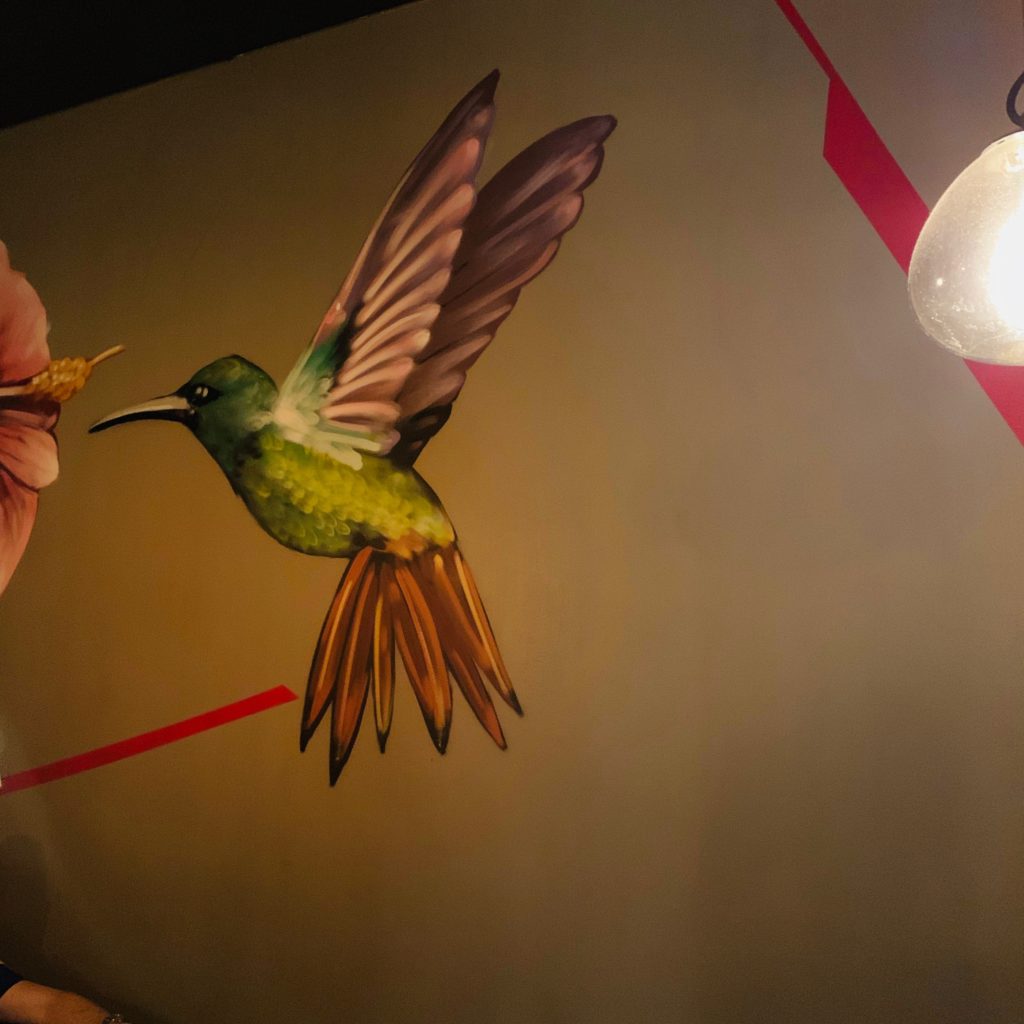
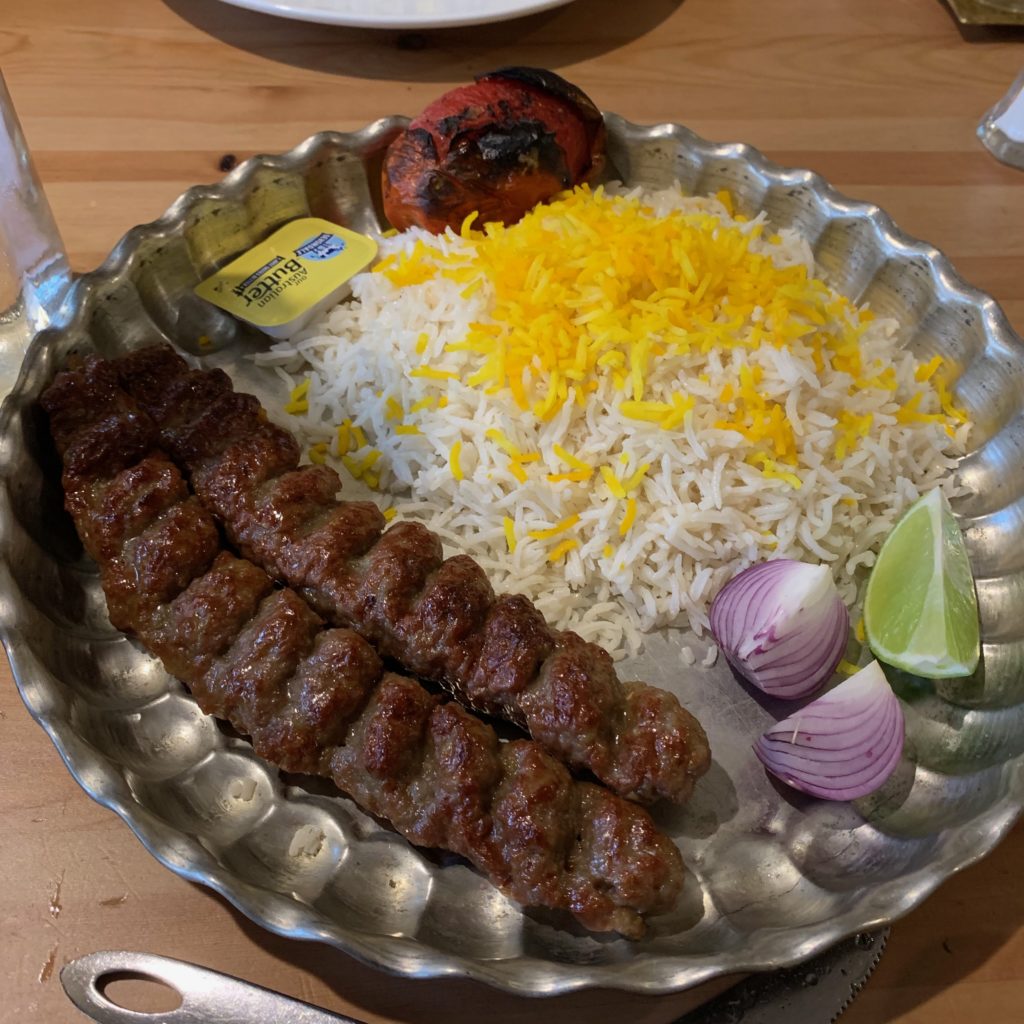




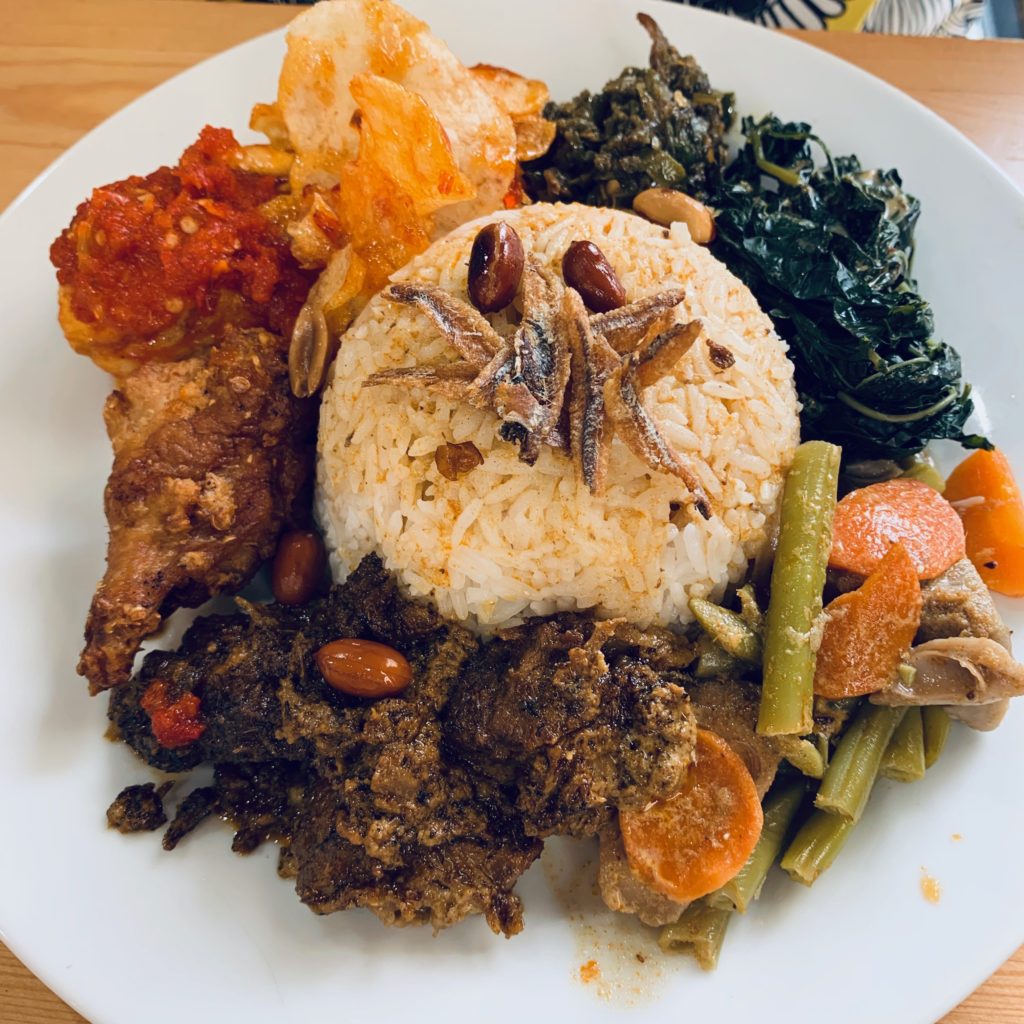 Biting into a whole cardamom is always unpleasant; it’s soapy and pungent, with a concentrated punch. But the thing is, as I know from when I’ve used it in my own cooking, it’s a good sign: that a dish has great spices, and not just ground powders. And Medan Ciak serves up Indonesian food with great flavour.
 The Longtong Sayur looked the most foreign to me, even though I was tempted by a special of an Indonesian style of wonton with roast pork. I’m glad I ordered it: a rich sauce and gravy, lots of different bits of food (a hard-boiled egg, crispy dried fish, a piece of chicken) and with the base starch a sort of rice cake, which was unfamiliar to me.
 I would guess that the reason I didn’t review Dead Ringer before is because I’ve only had cocktails here. But what cocktails! An interesting selection with enticing descriptions in a fun, casual, hip atmosphere. I sent friends here who told me they’ve been back more than once to flirt with the cute barmen. But finally, I managed to get a meal here, and it didn’t disappoint.
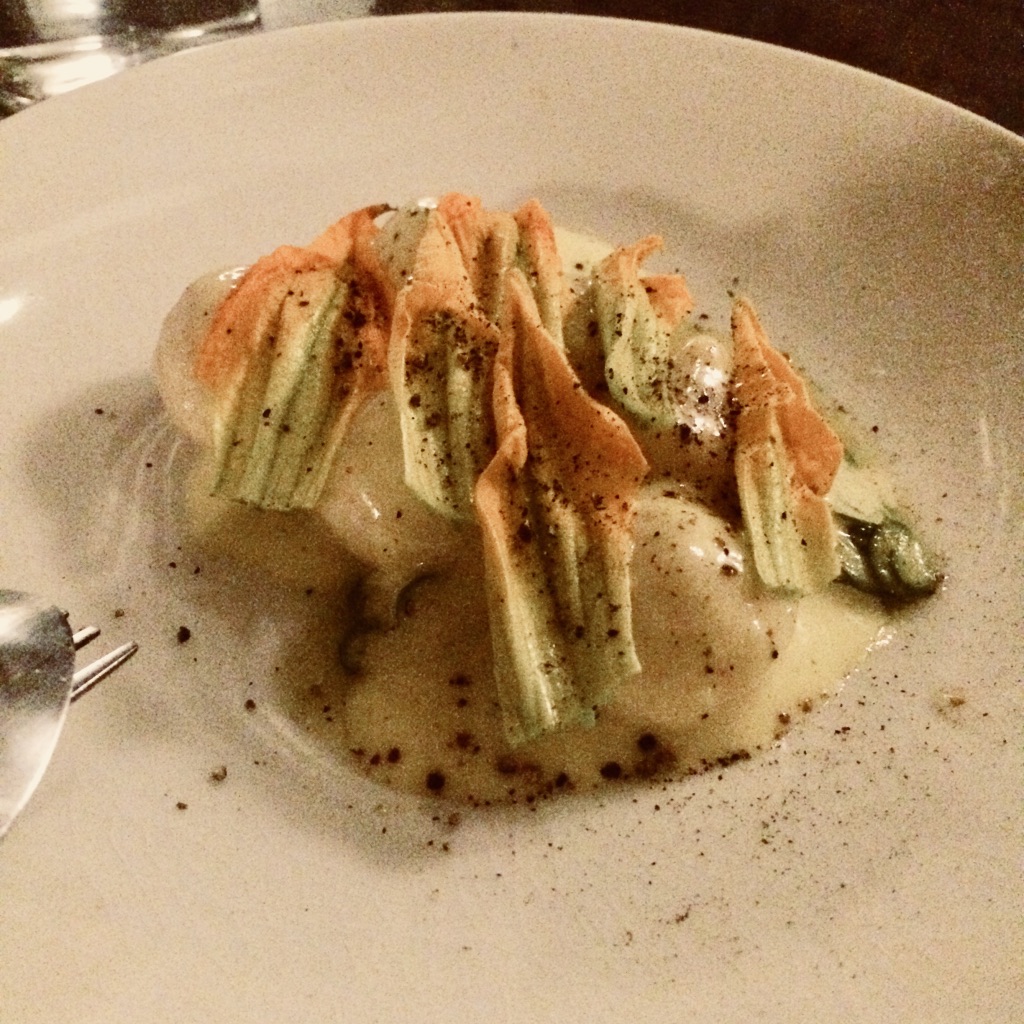
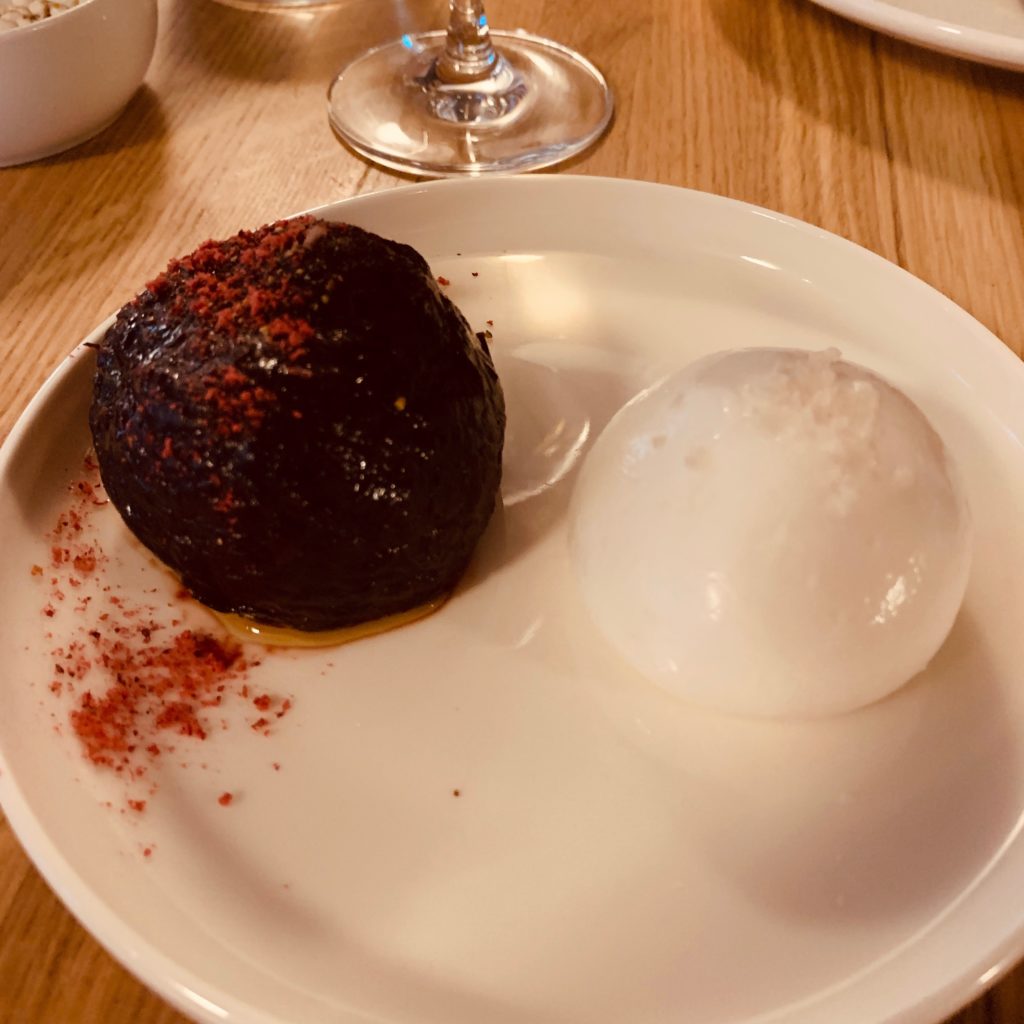
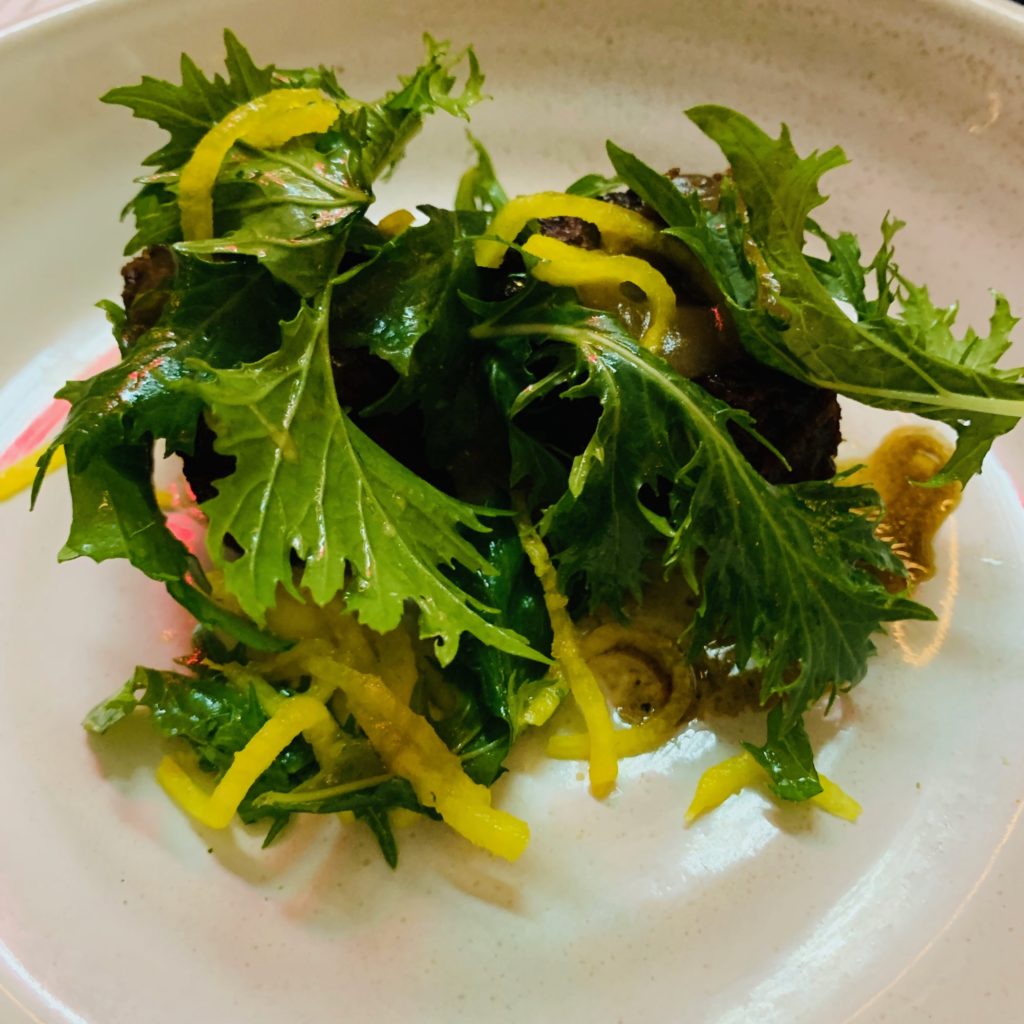
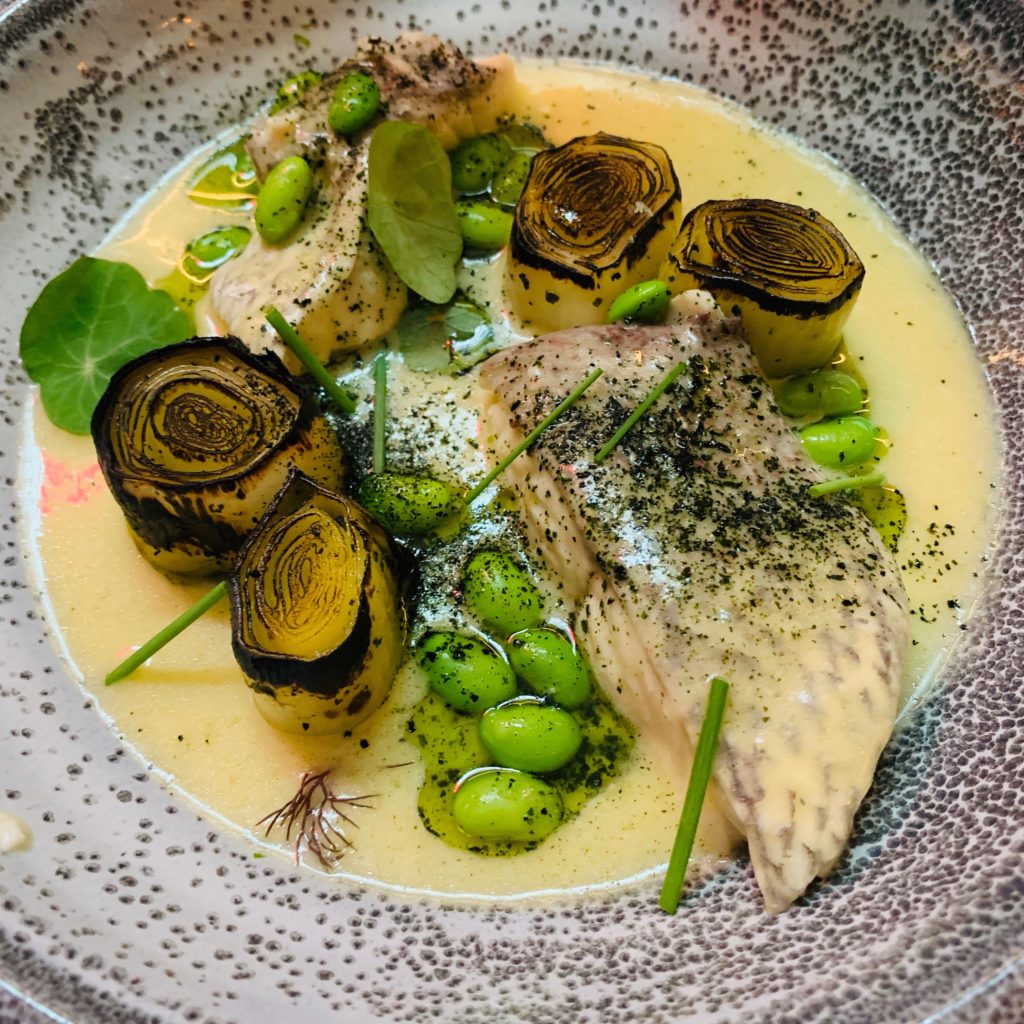
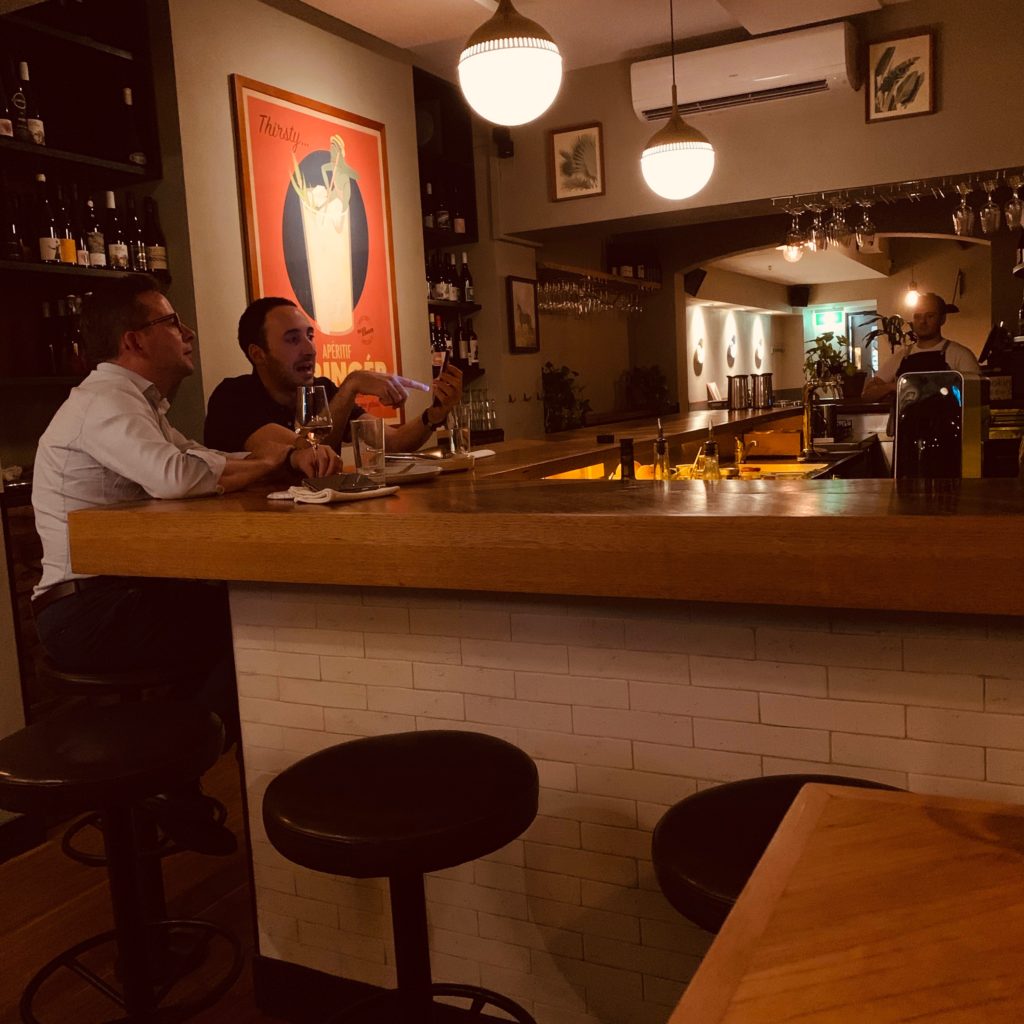 In any case, an Australian, a Swede and a Canadian meet at Dead Ringer. We split three mains, the gnocchi with wilted greens, smoked mozzarella and pine nuts ($26), the blue-eyed cod with pepperonata and charred salsa ($33) and charred flat-iron steak with a celeriac remoulade ($32), which I think was our favourite and the only one I got a photo of (I think I forgot to take photos as we were having such a good time).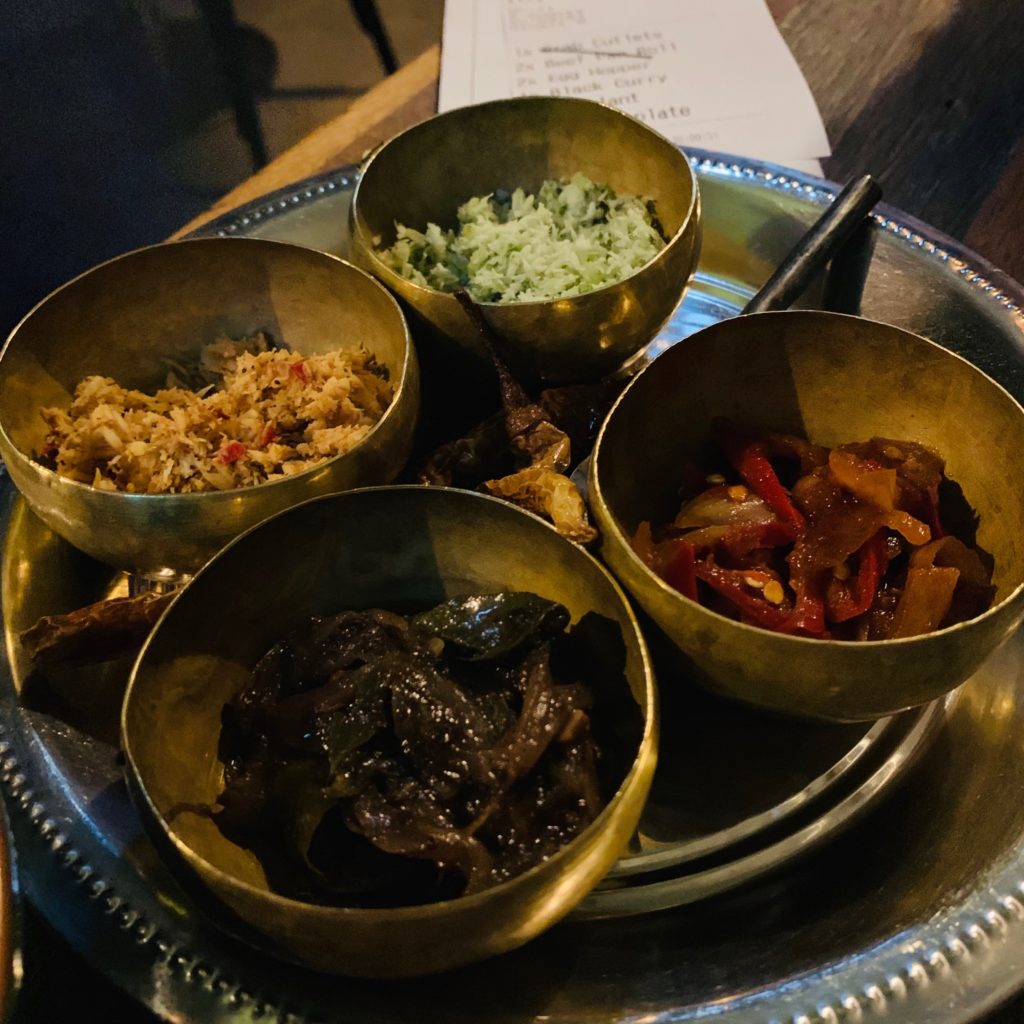
 I’d heard recommendations but hadn’t made my way to the Lankan Filling Station in Darlinghurst. We arrived a little after 7pm on a Tuesday and it was packed; we had to wait another half an hour to get in. Then, it’s a crowded little place with tiny tables, and I wasn’t sure of what to make of the menu: like a yum cha place where you tick off the orders on your own.
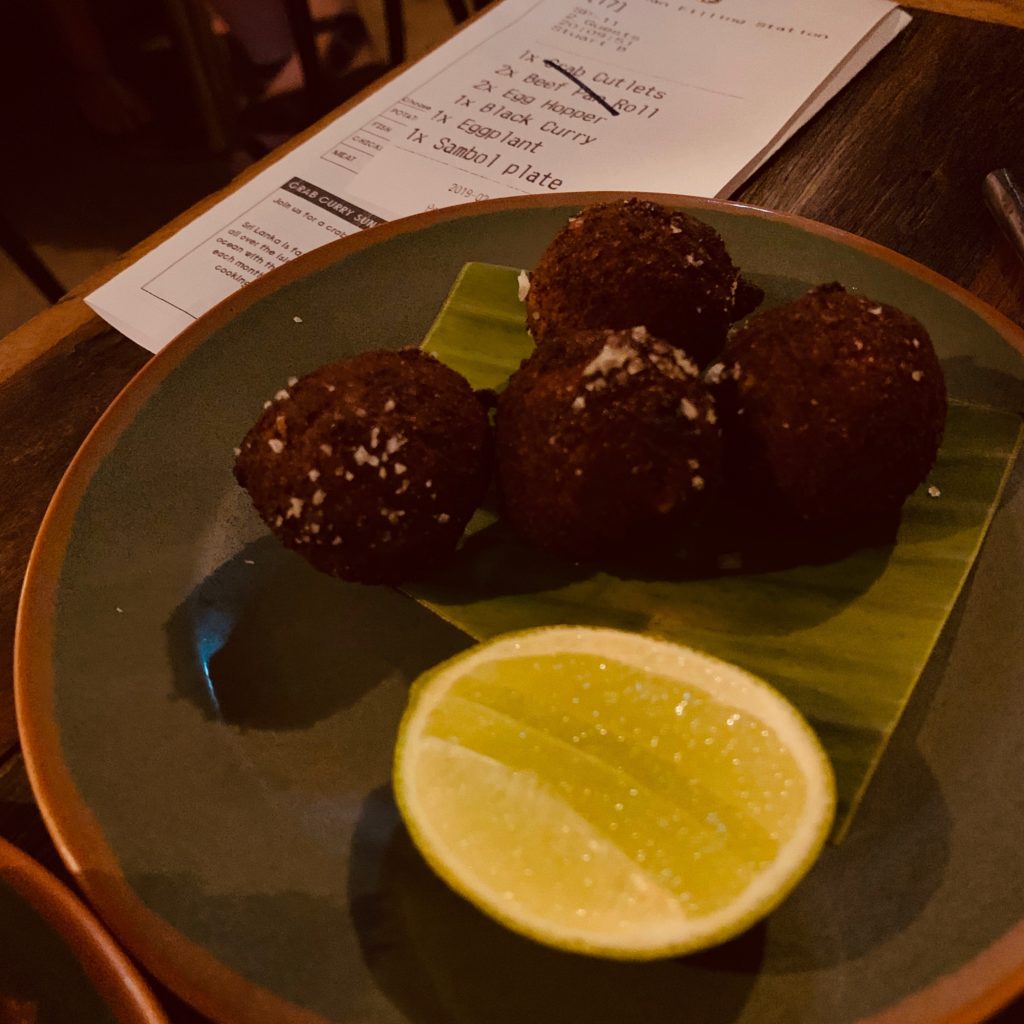
 But we got into the groove of things. The Beef Pan Rolls could have been not so pleasant in someone else’s hands. Plain flour crepes stuffed with ground beef, and then fried. But it was perfectly crispy, contrasting with the soft inside. The spices were great, as was a bright red dipping sauce.
 I find hoppers, either the crisp pancake kind, or the ones made out of rice noodles, a very tasty creation. We had ours with an egg in the centre, which I liked. But what really excites me are the sambals: with grated coconut and spices and pickles: I should pay more attention. But they’re really good mixed and matched with various bites (photo at the top!)
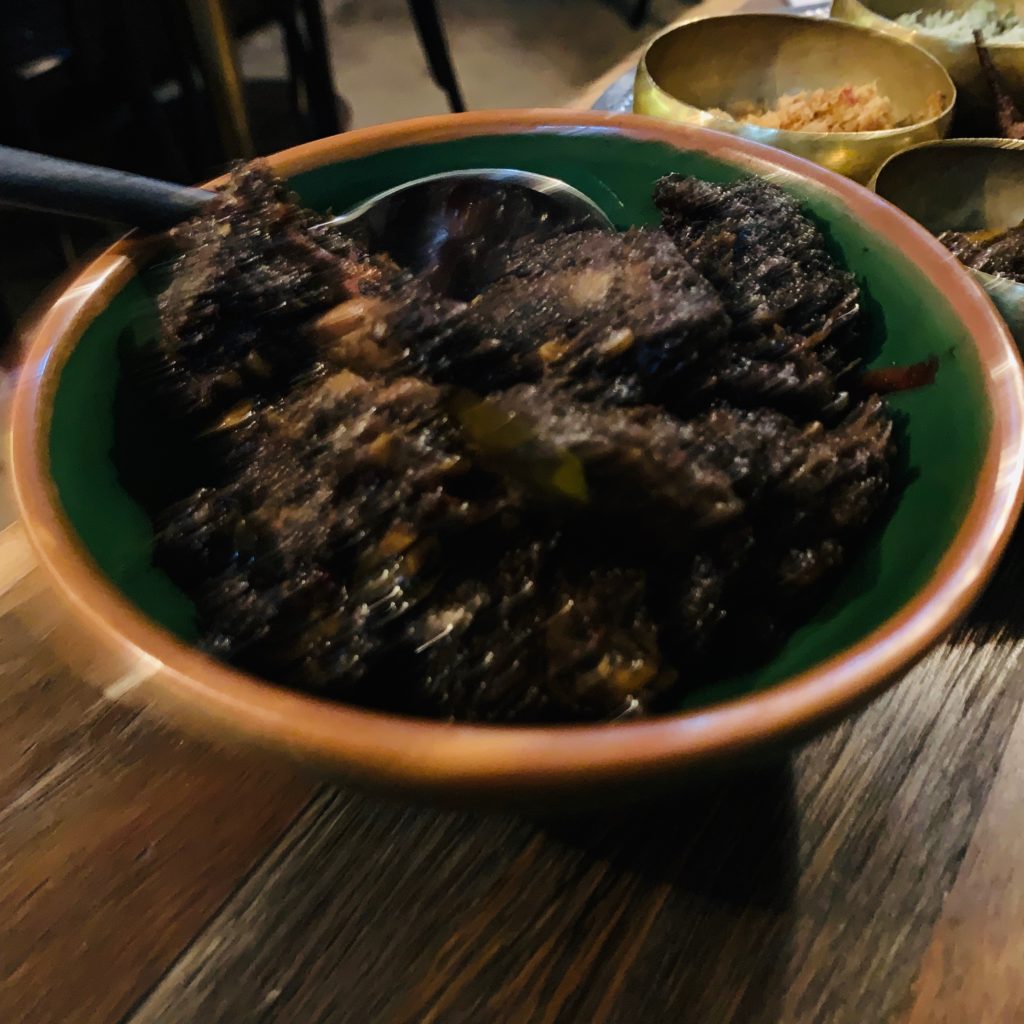 Goat curry is one of my favourites: such a strong flavour. The issue is that it usually is so full of bones that it’s hard to get at any meat. So, a boneless curry in an intense black curry, made of clove, cinnamon, cardoman and coriander seeds, charred and ground: heaven.
 Likewise the eggplant, with shiny fried curry leaves, a hit of sour in there somewhere to go with the spice. It’s got both tamarind in it and tomatoes. I loved this dish.
 It’s such a casual-looking place, Lebanese food, set slightly back from the street, that I must have walked by it a hundred times and never tried it. My loss.
 We split a falafel salad, four yummy kibbehs, and some hummus with ground beef… and it was slightly too much food for us.
 And it was all pretty much absolutely delicious. Couldn’t fault anything about it. I even had to take some of the leftovers home (I hate wasting food!)